
Bougainvillea in Pots: Complete Care Guide for Beginners
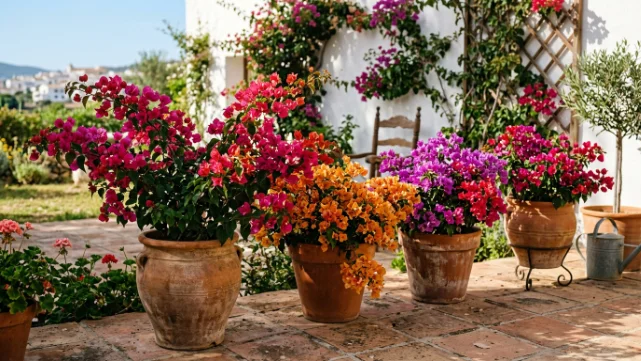
If a single image of a sun-drenched patio lined with bougainvillea in terracotta pots stopped your scroll, you already know the effect this plant creates. What you might not know is that those show-stopping displays of purple, white, and magenta aren’t the result of special conditions or expert-only techniques.
Bougainvillea is one of the most rewarding container plants in the world precisely because it thrives on a little neglect, demands full sun, and blooms with ferocity when you understand one key truth: this plant flowers under stress, not comfort.

What Exactly Is Bougainvillea, and Why Are Those ‘Flowers’ Actually Bracts?
The vivid color you see is not from petals; it comes from papery, leaf-like structures called bracts that surround the plant’s tiny, inconspicuous true flowers. These are actually modified leaf-like structures that encompass the actual flowers.
Plants use them to catch the eye of pollinators, like birds and insects, doing the heavy lifting that petals usually perform This distinction matters for care: the bracts are the plant’s response to environmental cues, particularly stress and full sun exposure, rather than a product of rich feeding or overwatering.
Botanically, bougainvillea belongs to the Nyctaginaceae family and is native to coastal Brazil, where it grows as a thorny climbing vine. The two species most common in home gardens are Bougainvillea spectabilis, which produces larger bracts and more vigorous growth, and Bougainvillea glabra, which is slightly smaller and better suited to container culture.
Most modern cultivars are hybrids bred specifically for compact growth, repeat blooming, and container suitability.
Which Bougainvillea Varieties Work Best in Terracotta Pots?
The best container varieties are compact-growing cultivars that stay manageable without sacrificing the dramatic bract display. Full-sized climbing bougainvilleas can reach 20 to 40 feet and will outgrow any pot quickly; the varieties below are bred to thrive in containers.
Purple and Violet Varieties
- Vera Deep Purple‘: one of the most vivid true purples available; excellent compact habit for containers
- Purple Queen‘: deep magenta-purple bracts with strong repeat bloom cycles; widely available
- Singapore Purple’: slightly smaller bract clusters, very free-flowering in full sun
White Varieties (the white plants in the pen):
- Miss Alice: the most popular white container bougainvillea; nearly thornless, compact, extremely heavy-blooming
- Jamaica White: crisp white bracts with a faint lilac tinge when young; vigorous and excellent against a white fence or wall
- White Madonna: fast-growing white climber; works well trained against a fence with moderate container management
For Mixed Patio Displays:
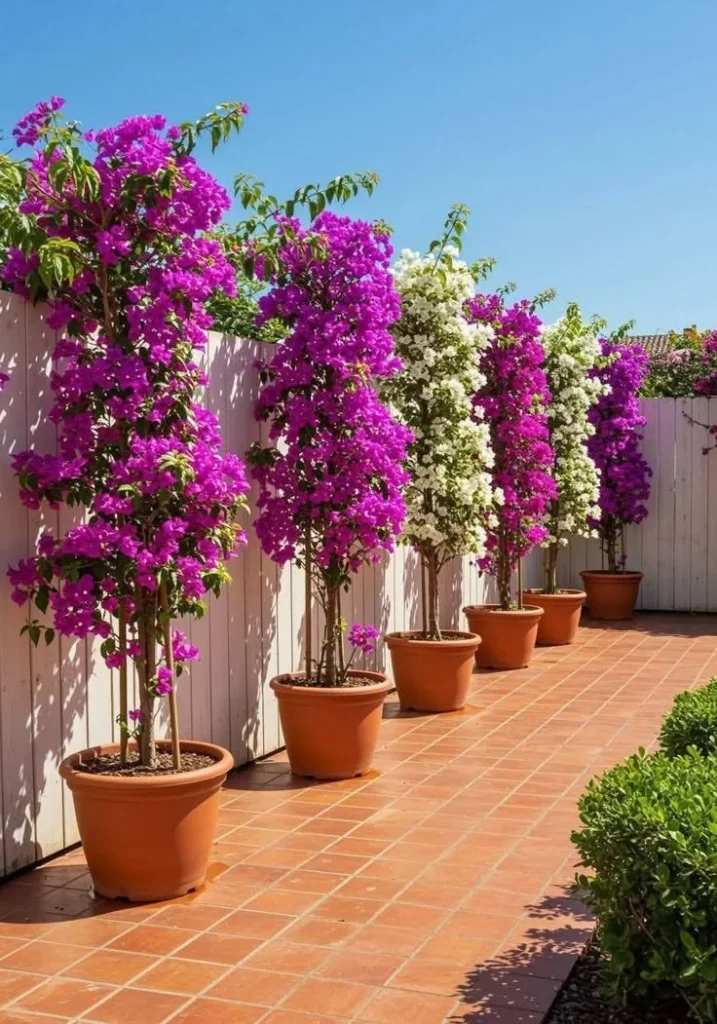
The purple-white-green colour combination in the image, alternating magenta, white, and fresh green foliage against a white fence on terracotta tile, is achieved by mixing ‘Vera Deep Purple’ or ‘Purple Queen’ with ‘Miss Alice’ in matching terracotta pots. The terracotta material itself is not a decorative coincidence: it is the best pot material for bougainvillea because it breathes, dries faster than plastic, and prevents the root waterlogging that kills more bougainvillea plants than any other cause.
What Soil Mix Does Bougainvillea Need in Containers?
Bougainvillea needs a fast-draining, slightly acidic to neutral soil mix (pH 5.5–7.0); it will not tolerate wet roots for any extended period. Standard potting soil alone retains too much moisture for this plant.
The recommended mix for container bougainvillea is two parts quality potting mix combined with one part perlite or coarse pumice. Some growers use a cactus and palm potting mix as a ready-made alternative, since its texture and drainage profile closely match what bougainvillea needs. Avoid mixes with high peat content, which retain moisture and can promote root rot in warm climates.
One important technique when potting: if transferring from a nursery grow pot, leave the root ball intact. Bougainvillea has thin, easily damaged roots, and disturbing them can set the plant back significantly. Make slits in the sides and bottom of the nursery pot rather than removing it entirely, and then plant pot and all into the decorative container.
How Much Sun Does Potted Bougainvillea Actually Need?
Bougainvillea needs a minimum of six hours of direct sun daily, but eight or more hours produces significantly more bracts. This is non-negotiable: plants receiving bright indirect light but not direct sun will produce lush foliage with very few bracts. The bract formation is directly triggered by heat and light intensity.
The terracotta tile patio setting in the image is an ideal environment. Terracotta tiles reflect and retain heat, warming the air around the plants and extending their effective sun exposure. Positioning pots against a white or light-colored wall as shown amplifies light reflection further and creates the warm microclimate bougainvillea originates from. If growing in cooler climates (USDA zones 7 or below), positioning against a south-facing wall or fence is essential to compensate for lower ambient temperatures.
What Is the Correct Way to Water Bougainvillea in Pots?
Water deeply, then allow the top two to three inches of soil to dry completely before watering again. This cycle of deep watering followed by a dry period is what triggers the stress response that produces heavy bract formation. A consistently moist pot produces green growth; a pot that experiences dry periods between deep waterings produces color.
For newly planted bougainvillea, water more frequently for the first season while the root system establishes. Once established, reduce frequency. In hot weather, terracotta pots dry out quickly; check soil moisture every two to three days during summer rather than following a fixed schedule. Never allow the pot to sit in standing water; ensure drainage holes are clear.
One common mistake: watering lightly every day. This keeps the top inch of soil damp while the root zone stays dry the worst of both worlds. Always water until liquid runs freely from the drainage holes, then wait for the surface soil to dry before watering again.
How and When Should You Fertilize Bougainvillea in Containers?
Bougainvillea is a heavy feeder and requires regular fertilization during the growing season to sustain its bract production. Use a balanced, water-soluble fertilizer (such as a 10-10-10 or bloom-boosting 5-10-10 formulation) diluted to half strength, applied every 7 to 14 days from spring through late summer.
Fertilizers with a higher phosphorus middle number encourage flowering over vegetative growth. Avoid high-nitrogen formulations during the main growing season; these push green leaf production at the expense of bracts. In autumn and winter, stop feeding entirely to allow the plant to rest. Resume in early spring when new growth appears.
When and How Do You Prune Potted Bougainvillea for More Blooms?
Prune after each bloom cycle, cutting long growth back by approximately half. This encourages the plant to produce new lateral shoots, which are the stems that generate the next flush of bracts. Without pruning, bougainvillea becomes leggy, producing long canes with bracts only at the growing tips.
For container plants specifically, pruning also controls size. The tree-form standard display in the pin single-stem plants with a full head of bracts is achieved by training young plants to a central leader, removing lower lateral branches, and allowing only the upper canopy to develop. This takes two to three growing seasons but creates the dramatic, architectural look that performs so well in terracotta pot arrangements.
Can Bougainvillea Stay in Pots Through Winter?
In USDA zones 9 to 11 (parts of California, Texas, Florida, Arizona, and the Mediterranean climate regions), potted bougainvillea can remain outdoors year-round with minimal protection. In zone 9a and below, plants in pots are vulnerable to frost damage because container roots have no soil mass insulating them from temperature drops.
For cold-climate gardeners, the container advantage is mobility: bring the pot indoors before the first frost, cut the plant back to reduce strain, and store in a sunny garage or basement that stays above 7°C (45°F). Water once every three to four weeks during dormancy just enough to prevent complete drying. When temperatures reliably stay above 10°C at night in spring, return the plant outdoors gradually, giving it one to two weeks of morning sun before full-day exposure to avoid shock.
How Do You Style Bougainvillea Pots for Maximum Patio Impact?
The image that went viral on Pinterest works because of five specific design principles working together simultaneously:
- Repetition: multiple matching terracotta pots of the same size and style create visual rhythm
- Color contrast: alternating magenta-purple and white varieties produce a bold palette without clashing
- Height variation: slight differences in plant height create natural depth across the arrangement
- Background clarity: a plain white fence allows the bract colour to dominate without visual competition
- Surface continuity: warm terracotta floor tiles echo the terracotta pot material, unifying the entire composition
For replicating this at home, use terracotta pots no smaller than 30–40 cm (12–16 inches) in diameter; smaller pots dry out too quickly in full sun and limit root development. Space pots close enough that the canopies begin to touch as the plants mature; this creates the lush, wall-of-color effect rather than isolated individual plants.
Final Thought
The bougainvillea patio look isn’t a garden designer’s trick; it’s a plant doing exactly what it evolved to do in the right conditions. Full sun, fast-draining soil in a terracotta pot, disciplined watering, and a light pruning after each bloom cycle are all it takes. Start with one pot of ‘Miss Alice’ and one of ‘Vera Deep Purple’ against any light-colored wall, and you’ll understand within one growing season why this plant has been a Mediterranean and subtropical garden staple for over 200 years.
3 Comments