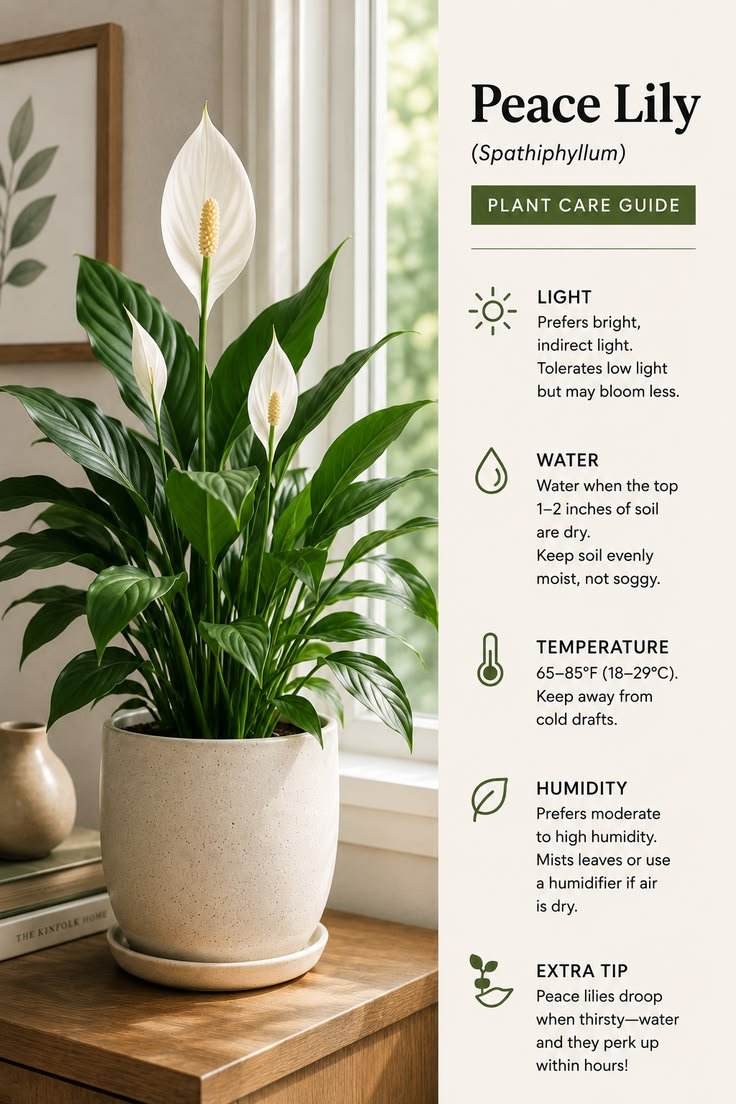
Peace Lily Care: The Complete Guide To Watering, Light, And Getting It To Bloom
Contrary to common knowledge, the drooping of the peace lily actually means that the plant needs more water. This is the first important fact regarding the peace lily, as it is usually misunderstood in caring for indoor plants. Peace lilies are some of the easiest plants to judge, once the signs are understood. The reason being that they start to wilt the minute they are dehydrated but recover within a few hours after watering.
Besides that one behavior alone, peace lilies have shiny leaves and white flowers with not much work involved. Peace lilies are also shade tolerant. Given that certain requirements are fulfilled, they belong to the rare flowering indoor plants that actually flower in an office environment or a place with very little sunlight. The following is information regarding what should be done if anything goes wrong.
Why Does My Peace Lily Keep Drooping?
The plant is thirsty. After getting used to its conditions, the peace lily has the capability of wilting immediately once the soil dries up and being revived after a few hours of water; this characteristic makes the plant an advantage. As opposed to other plants, which will slowly deteriorate, this plant calls for attention.
Overwatering may cause droopy leaves too but in a different way. The easy way to differentiate between both situations is
- Thirst-caused drooping: The soil will feel dry, the leaves will bounce back and regain their perkiness after a few hours of watering, and the soil should have no smell.
- Overwatering-caused dropping: The soil will feel moist or soggy, the leaves will continue to hang after being watered, and the soil will have a smell to it.
- Root-bound drooping: The plant will dehydrate rapidly, you’ll see roots coming out of the drainage holes, and the plant will begin to droop more often.
- Cold stress drooping: The drooping happens right after the plant was subjected to a cool breeze, cold window, or air conditioning vent.
By confirming whether the soil is moist before deciding whether the plant needs more water, much uncertainty is avoided and the frequent mistake of watering an overwatered plant is prevented.
How Often Should You Water A Peace Lily?
Generally, the watering occurs about once a week, but this depends on lighting, humidity, and time of the year. The plant does not like being completely dry; however, it does not like constantly wet soil that causes root rot either.
This is a problematic case for tap water in particular, as peace lilies are quite sensitive to fluoride in tap water, which results in brown tips of green leaves. The following watering-related habits make a difference:
- Use filtered or distilled water or lukewarm rainwater where possible
- In case filtered water cannot be obtained, leave tap water open overnight so that some chlorine can dissipate from it
- Pour plenty of water into the plant pot until the water starts draining out of its bottom
- Never let the plant pot stand for long in a saucer that is full of water
Filtered, distilled, or room-temperature rainwater will be worth your while if you have tip burn for which there is no other explanation.
What Light Does A Peace Lily Need?
The peace lily is much better adapted to low-light conditions than most other flowering houseplants, although bright indirect light is ideal for the plant. While the soft light of the morning provided by an eastern window is good for the plant, the strong light of the afternoon through a southern window is not.
Direct light may burn the leaves and cause quick dehydration, more than the plant can handle. On the other hand, if the peace lily is grown in very low light, it will live but not flower, as it needs more energy than that light provides.
- Bright, indirect sunlight ensures rapid growth and flowering and lush green foliage
- Medium, indirect sunlight is responsible for having a healthy plant that flowers once in a while and grows slowly
- In low lighting conditions, the plant survives with green leaves, but flowers are uncommon or nonexistent
- Direct sunlight results in leaf burning and the formation of whitish patches
How Do You Get A Peace Lily To Bloom?
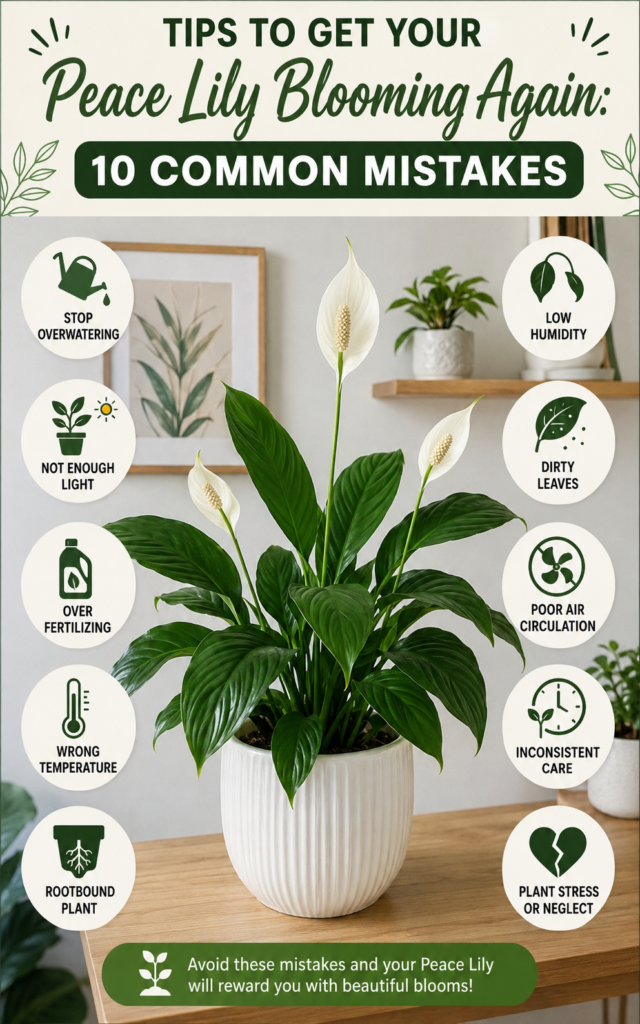
Move the plant to a more sunlit spot. The peace lily needs many hours of intense indirect light daily in order to generate enough energy for flower formation, and so inadequate lighting is the almost certain reason for the failure to bloom. Even if the plant finds itself in a shaded corner, it will not bloom there.
Fertilization is a minor factor. If the problem is not lighting, then a switch to a flowering formula fertilizer, which will be richer in phosphorous, might be helpful, because too much nitrogen may cause pale flowers rather than white ones. Some other factors that stimulate flowering are
- Keep your plant root bound because the peace lily is known for producing more blooms while in a pot that is slightly root bound
- Make sure you dust the leaves to allow for proper photosynthesis
- Do not let the soil dry out because drought will cause flower production to be delayed
- Fertilizer should be applied every six weeks from spring through summer and less fertilizer in fall and winter
Humidity And Temperature
Peace lily plants enjoy growing under high humidity and tropical-type conditions indoors. For instance, in the winter season, when there is generally dry air due to heating appliances, this can be compensated by sometimes spraying the leaves of the plant or by positioning the pot over a bed of wet pebbles.
The peace lily needs to grow under warm conditions where the daily temperatures are between 65 and 75°F (18-24°C). Ideally, the nighttime temperatures should be slightly cooler. It is best not to expose the plant to areas near the air conditioning or heating vents, as it is stressed more under such conditions than might be thought.
- Sudden and widespread drooping that cannot be blamed on soil moisture insufficiency, often caused by exposure to a draft of cold air
- Browning due to desiccation of leaf tips or edges near a heat source
- Slow growth in winter, which is normal, but without signs of stress
Common Peace Lily Problems And How To Fix Them
Brown leaf tips usually result from substances in tap water, low humidity in the air, or excessive sun rays. Use filtered water and check the light situation of the plant.
Yellowing leaves usually mean overwatering, but sometimes it can be just a natural process of aging of old leaves. In case of yellowing of several leaves at once, when the soil is moist, try to lower the amount of watering.
Lack of blossoms is always associated with the lack of light. Move the plant into a bright place.
Green flowers instead of white usually mean over-fertilization with nitrogen-containing fertilizers. Cut down fertilizing and use flowering fertilizer.
Scale bugs, or mealybugs, could be signalled by sticky material or projections on the leaves. Use a dish soap and water solution to wash the leaves, repeating this process every couple of days until the problem is gone.
Curling of the leaves together with the soil being dry means that you should immediately give the plant some water. The plant will quickly recover from this.
The peace lily requires next to nothing and indicates its needs through its leaves, making it one of the most tolerant flowering plants that can be found in your home or office setting.
FAQ
Is Peace Lily Toxic To Cats And Dogs?
Yes. The peace lily plants have calcium oxalate crystals, which may cause irritation of the mouth, throat, and stomach if chewed; thus, the peace lilies should not be accessible to animals and young children.
Can Peace Lilies Grow In Water Alone?
Further, it is worth noting that peace lilies can be grown in water without the presence of soil, a practice that is widely suggested for glass vases. The base of the plant must always be kept dry while the roots are grown in water; otherwise, rot will occur.
Why Are My Peace Lily’s Flowers Turning Brown?
The process is part of the normal stages in the flowering process. The flowers change in color from white and green to brown within a few weeks before they are removed from the base.
How Do I Revive A Wilted Peace Lily?
First, check the condition of the soil. In case it is dry, give the plant some water, and it will revive within a few hours. In case it is wet, let the soil dry up and think about replanting in fresh soil.
How Often Should I Fertilize A Peace Lily?
Every six weeks during the spring and summer seasons, apply half-strength balanced house plant fertilizer; stop fertilization completely during the autumn and winter seasons.