
How to Grow Petunias: 10 Easy Tips for Beginners and Seasoned Gardeners
Petunias are among the easiest and most rewarding flowering plants you can grow at home, whether indoors or outdoors. From spring until the first frost of autumn, they provide continuous color and beauty with relatively low maintenance.
Native to South America and belonging to the Solanaceae family (the same family as tomatoes and peppers), Petunia hybrida has been developed into hundreds of modern varieties. These range from compact bedding plants to long trailing types that spill beautifully from hanging baskets.
Today, petunias are available in almost every color imaginable and can be grown in garden beds, balcony containers, window boxes, or even indoor pots with proper sunlight. This guide explains everything you need to know about how to grow petunias at home successfully, from choosing the right variety to planting, watering, fertilizing, and decorating your space.

Choosing the Right Petunia Variety for Your Home
Selecting the right petunia variety is the first and most important step in successful growth. Different types perform better depending on space, climate, and maintenance preference.
Grandiflora petunias are known for their large and dramatic flowers that can reach up to five inches in size. They are perfect for containers and decorative pots where their beauty can be showcased, but they require regular care and deadheading to maintain continuous blooms.
Multiflora petunias produce smaller flowers but bloom in large quantities. They are more weather-resistant and ideal for garden beds, borders, and outdoor landscapes where durability is important.
Milliflora petunias are compact and perfect for small spaces such as balconies or tabletops. Despite their small size, they produce a dense display of flowers that last throughout the season.
Wave and Supertunia varieties are the most popular modern petunias because they are low maintenance and self-cleaning. These trailing types spread widely and create stunning floral cascades in hanging baskets and large containers. They are ideal for beginners who want maximum color with minimal effort.
If you prefer ease and long-lasting blooms, Wave and Supertunia are the best choice. If you want large, showy flowers and don’t mind extra care, grandiflora varieties are more suitable.
Petunia Color Guide for Home Decoration
Petunias are available in nearly every color. Here is how to match color to location and design intent:
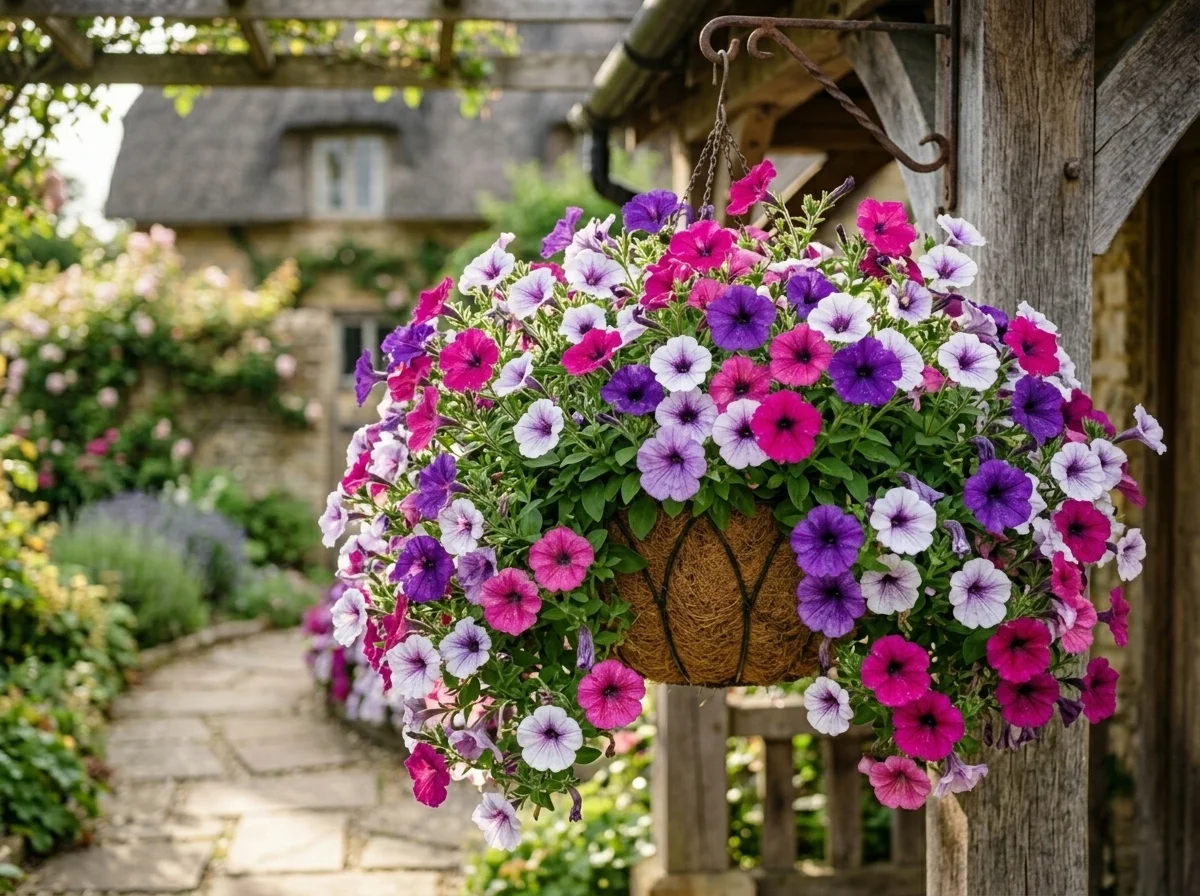
Deep Purple and Violet (e.g., Wave Purple, Supertunia Bordeaux, Night Sky): Rich and dramatic. Use in standalone pots or as a focal point in hanging baskets. Night Sky has white star-speckled purple petals that photograph beautifully.
Vivid Pink and Magenta (e.g., Supertunia Vista Bubblegum, Supertunia Raspberry Blast): High energy, cottage-garden look. Best against white walls or light-colored fencing. Vista Bubblegum is the most floriferous Supertunia on record.
Soft Lavender and Lilac (e.g., Supertunia Bordeaux, Picobella Lavender): Romantic and calming. Works beautifully in mixed planters alongside silver-foliage plants like dusty miller.
Cherry Red and Burgundy (e.g., Supertunia Black Cherry, Easy Wave Burgundy): Bold, high-contrast. Pair with white or yellow petunias for maximum visual impact. Black Cherry has striking black accents.
Bright White (e.g., Supertunia White, Firefly Petunia): Clean and versatile. White petunias brighten shaded corners and pair with any other color. The Firefly Petunia, available since 2024, glows a soft yellow-green in darkness, a genuinely unique home decor option.
Sunset Yellow and Coral (e.g., Supertunia Mini Vista Yellow): Warm and cheerful. Yellow petunias contrast beautifully with bold purples and reds. Note: yellow can fade to creamy in hotter climates.
Bicolor and Striped (e.g., Midnight Gold, Priscilla, Pretty Much Picasso): Two-tone blooms with veining or edge coloring add depth to any arrangement. Midnight Gold has royal purple blooms edged in creamy gold, a standout for decorative containers.

Soil and Sunlight Requirements for Healthy Growth
Petunias grow best in full sunlight and require at least six hours of direct sun every day. Without enough light, they become weak, produce fewer flowers, and may develop diseases.
The soil must be well-draining and moderately fertile. A slightly acidic to neutral pH between 5.5 and 7.0 is ideal. For container planting, a mix of high-quality potting soil with perlite ensures proper drainage and healthy root development.
Heavy clay soil should be avoided because it retains too much moisture and can cause root rot. If clay soil is present in your garden, raised beds or containers are a better option. Refreshing soil each season also helps maintain strong growth and continuous flowering.
How to Plant Petunias Successfully at Home
The easiest method is to buy young transplants from a nursery and plant them outdoors after the last frost date, but growing from seed indoors gives you access to a wider range of rare and specialty varieties.
From transplants: Buy compact, short plants; avoid leggy ones. Space plants about 12 inches apart for multifloras and grandifloras; Wave and Supertunia types need at least 24 to 36 inches to spread. Plant in full sun after all frost danger has passed.
From seed: Start seeds indoors 10 to 12 weeks before the last frost date. Petunia seeds are extremely ffine, almostdust-like, and need light to germinate. Press them gently onto moist seed-starting mix without covering. Keep at 20°C (68°F). Seeds germinate in 7 to 10 days. When seedlings show their second set of leaves, transplant them to 9 cm pots. Pinch growing tips when the plant reaches 8 cm to encourage bushy growth.
From cuttings: Take 4- to 6-inch cuttings from healthy, non-flowering stems in mid-summer. Remove lower leaves, dip in rooting hormone, and plant in a 50/50 mix of potting compost and coarse sand. Roots form within 2 to 4 weeks. This method is excellent for preserving a favorite variety through winter.
Container sizing: Grandifloras and Wave types need containers at least 10 to 12 inches wide; millifloras and multifloras adapt to 6 to 8 inch pots.

Watering Petunias the Right Way
Proper watering is essential for healthy petunias. In garden beds, deep watering once or twice a week is usually sufficient. Container-grown petunias, however, require more frequent watering because they dry out faster.
Water should always be applied at the base of the plant instead of overhead. Wet leaves can lead to fungal diseases and poor plant health. Morning watering is best because it allows excess moisture to evaporate during the day.
Underwatering leads to wilting and dry leaves, while overwatering causes yellowing and weak stems. Checking soil moisture regularly is the best way to maintain balance.
Fertilizing for Continuous Blooms
Petunias are heavy feeders and require regular fertilization to maintain continuous flowering. A balanced fertilizer can be used at planting time, but once growth begins, a bloom-boosting fertilizer with higher phosphorus and potassium is recommended.
Feeding every one to two weeks ensures strong flower production. Container plants may need more frequent feeding because nutrients are washed out more quickly. Avoid excessive nitrogen, as it promotes leafy growth instead of flowers.
Consistent fertilization is one of the most important factors in achieving vibrant and long-lasting blooms.
Deadheading and Pruning for Better Growth
Deadheading helps petunias produce more flowers by removing spent blooms before they form seeds. This redirects energy into new growth and keeps the plant looking fresh.
Traditional petunia varieties benefit greatly from regular deadheading, while modern Wave and Supertunia types naturally shed their old flowers and require little maintenance.
By midsummer, petunias may become long and less attractive. At this stage, pruning them back encourages new branching and fresh blooms. Cutting stems back by one-third to one-half, followed by fertilizing and watering, helps restore full flowering within a few weeks.
Decorating Your Home with Petunias
Trailing Wave and Supertunia varieties create the most dramatic home decoration when grown in hanging baskets or railing window boxes, where their two-to-three-foot cascading stems form curtains of color visible from street level.
Hanging baskets: Use a 12 to 14 inch basket with a moisture-retaining liner. Plant one trailing variety in the center and two or three around the edges for a full, overflowing look. Supertunia Vista Bubblegum (vivid magenta-pink) and Wave Purple are the most sought-after choices. Hang where they receive at least six hours of direct sun.
Window boxes: Use a mix of upright and trailing varieties, one upright multiflora in the back, and trailing Wave types in front to spill over the edge. Color combinations that work particularly well: cherry red with white, purple with soft pink, or bicolour Midnight Gold as a standalone centerpiece.
Terracotta and glazed pots: Glazed pots in light colors retain moisture better than terracotta and are ideal if you travel frequently. Use millifloras like the Picobella series for small 6 to 8-inch decorative pots on windowsills and tabletops.
Front door and entryway styling: A matching pair of large containers flanking a front door, planted with the same Supertunia or Wave variety, creates a cohesive, high-impact welcome. Choose a color that complements your door: deep purple against a black door, bright white against navy blue, or vivid magenta against charcoal grey.
Companion Plants for Petunias
Petunias grow well alongside marigolds, verbena, zinnias, dusty miller, and calibrachoa. These plants share similar sunlight and soil requirements and help enhance the visual appeal of arrangements.
Marigolds are especially useful because they help deter common pests. Dusty miller adds contrast with its silver foliage, while verbena and calibrachoa extend the flowering effect in mixed containers.
Avoid pairing petunias with shade-loving plants, as their requirements are not compatible.
Protecting Petunias from Pests and Diseases
Common petunia problems include aphids, budworms, fungal diseases, and leggy growth. Most of these issues can be prevented with proper care.
Aphids can be controlled using insecticidal soap or natural predators like ladybugs. Budworms, which damage flower buds from inside, can be treated using biological sprays such as Bt.
Fungal diseases usually occur due to excess moisture and poor airflow, so proper watering techniques and spacing are important. Leggy growth is often caused by lack of sunlight or insufficient pruning.
Growing Petunias Indoors
Petunias can be grown indoors if they receive enough light. A bright south- or west-facing window is ideal, or a grow light can be used as a supplement.
Compact milliflora varieties perform best indoors due to their smaller size and manageable growth. Well-draining soil and pots with drainage holes are essential to prevent root rot.
With proper care, indoor petunias can provide colorful blooms even in small living spaces.
Conclusion
Learning how to grow petunias at home is one of the simplest ways to create a vibrant and colorful living space. With the right variety selection, proper sunlight, balanced watering, and regular feeding, petunias can bloom continuously from spring to fall. Whether used in gardens, balconies, or indoor spaces, they offer unmatched beauty and versatility for any home gardener.


2 Comments