Backyard Garden Designs: Simple Ideas To Turn Any Yard Into A Retreat
Backyard Garden Designs That Turn A Plain Yard Into A Retreat
One do not require acres of land for a backyard that actually feels good to be in. Half the yards I’ve seen turned around were smaller than a two-car garage, and the owners just hadn’t analyzed what to do with the space yet. This guide covers the details that actually move the needle: how to lay things out, which plants pull their weight, where lighting matters, and what people tend to get wrong. None of it requires hiring a crew or clearing out a savings account.
What Makes A Backyard Garden Design Actually Work?
Honestly, it comes down to whether the design matches how you live. A family that grills every Saturday needs something totally different from someone who just wants a quiet spot to read with coffee. I’ve watched two neighbors with the exact same lot size end up with completely different yards because one wanted a play area for kids and the other wanted somewhere to disappear from the world for twenty minutes.
Before you buy a single plant, spend a few days just watching the yard. Where does the sun actually hit at 8 a.m. versus 5 p.m.? Where do your kids or dog naturally end up? Where do you already stand when you step outside, even without thinking about it? Those small habits usually tell you more about the right layout than any design blog will.
How Do You Choose A Layout For A Small Backyard?
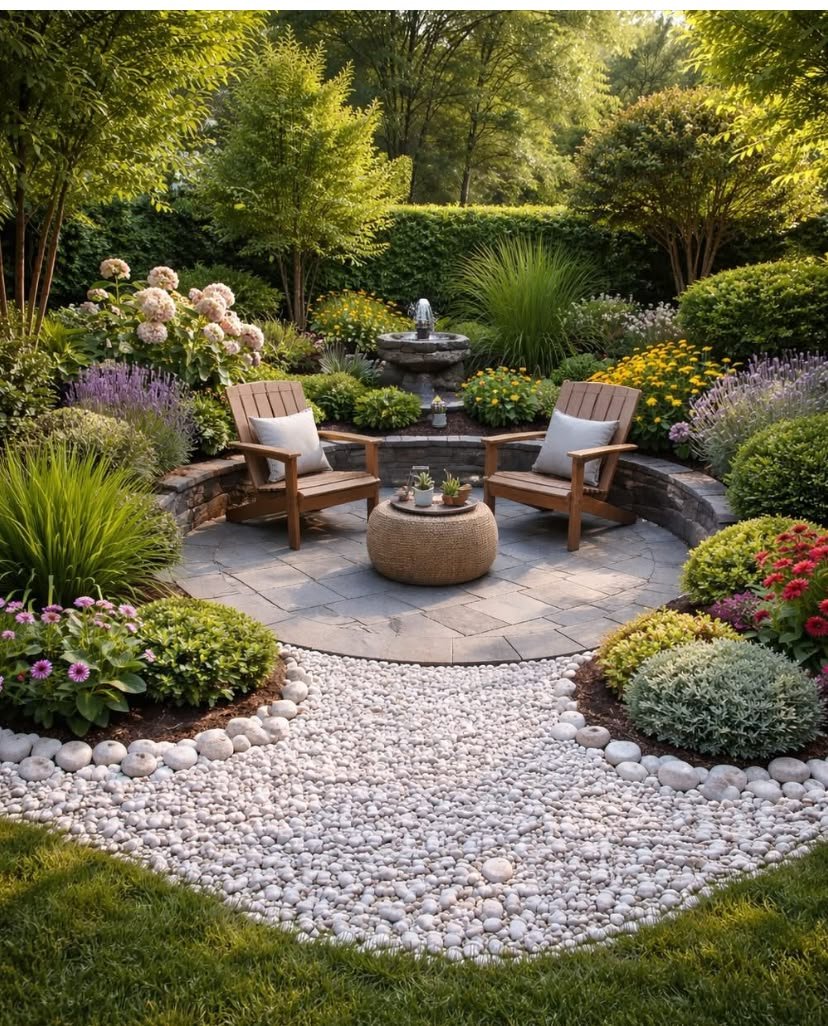
Small yards actually do better broken into zones than left as one open stretch of grass. A seating area here, a planting bed there, a narrow path connecting them. It sounds counterintuitive since you’d think more open space would feel bigger, but the opposite tends to happen. Dividing things up gives your eye somewhere to land instead of taking in the whole yard in one glance and being done with it.
Curves help too, more than most people expect. A straight-edged bed shows its whole hand at once. A curved one makes you want to see what’s around it. Try layering the plants along that curve so the shorter ones sit up front and taller ones lean in behind them. Even one tall shrub or a small tree tucked near the back fence can trick the eye into thinking the yard has more height and more room than it really does.
Which Backyard Garden Designs Fit A Low-Maintenance Lifestyle?
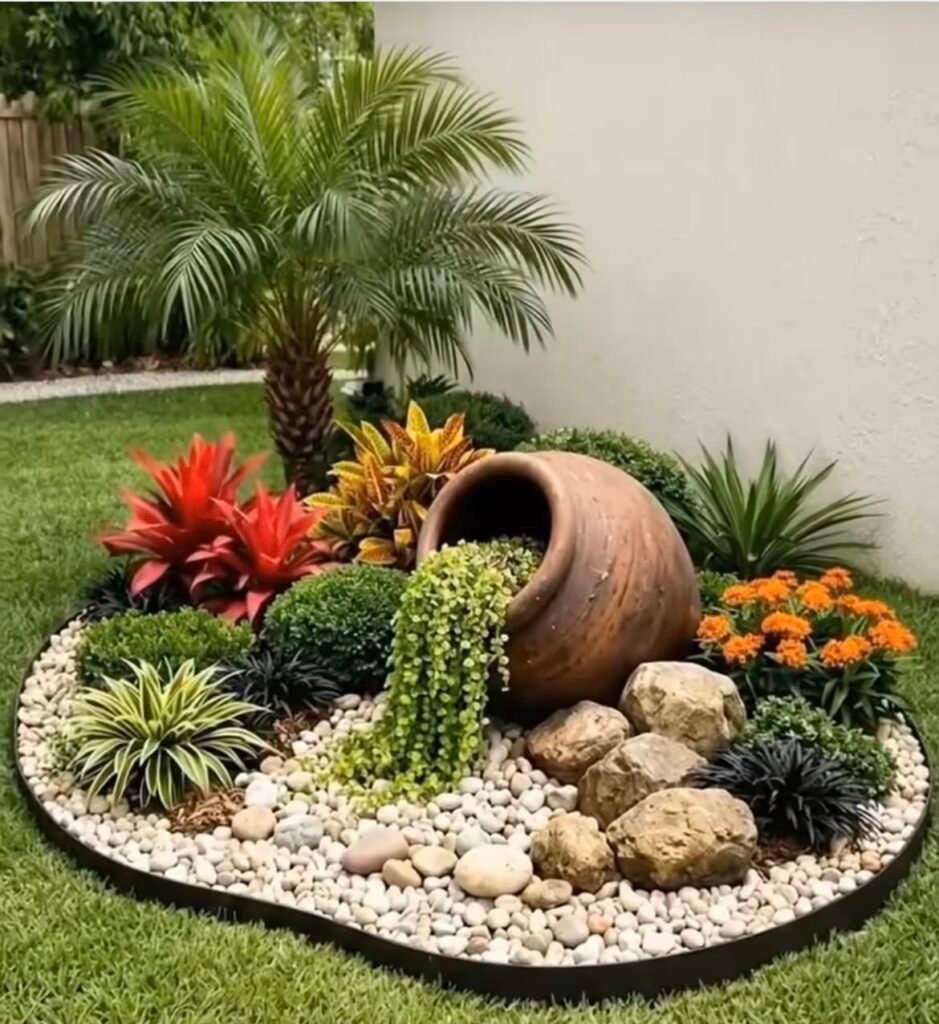
Not everyone wants a second job watering and weeding on the weekends, and that’s fine. Xeriscaping, gravel beds, and native plant borders all cut that work down without leaving the yard looking half-finished. Native plants especially earn their keep here. Once they settle in, they shrug off dry spells and weird weather swings way better than the imported stuff from the big box nursery, which means fewer trips back to replace what died.
Raised beds are worth a look too if low effort is the goal. They drain better on their own, keep weeds from taking over, and let you control the soil without digging up the whole yard to fix it. There’s a bonus most people don’t think about: because the soil sits up off the ground, it warms up earlier in spring, so you actually get a slightly longer growing season without lifting a finger for it.
What Role Do Pathways And Seating Areas Play In Garden Design?
A path isn’t just there to get you from A to B. A stepping-stone trail or a strip of gravel pulls your eye through the garden and keeps beds from blending into one green blur. Even a short one, four or five steps, is enough to suggest there’s more going on than what you can see standing at the back door.
And seating is what actually gets a garden used instead of just admired from a window. A small patio, a built-in bench, or honestly just two mismatched chairs dragged next to a flower bed does the job. Point that seating toward whatever’s best in the yard, a flowering shrub, a little water feature, or the way the light hits around 6 p.m., and that corner becomes the place people naturally gravitate toward.
How Can Lighting Change The Feel Of A Backyard Garden?
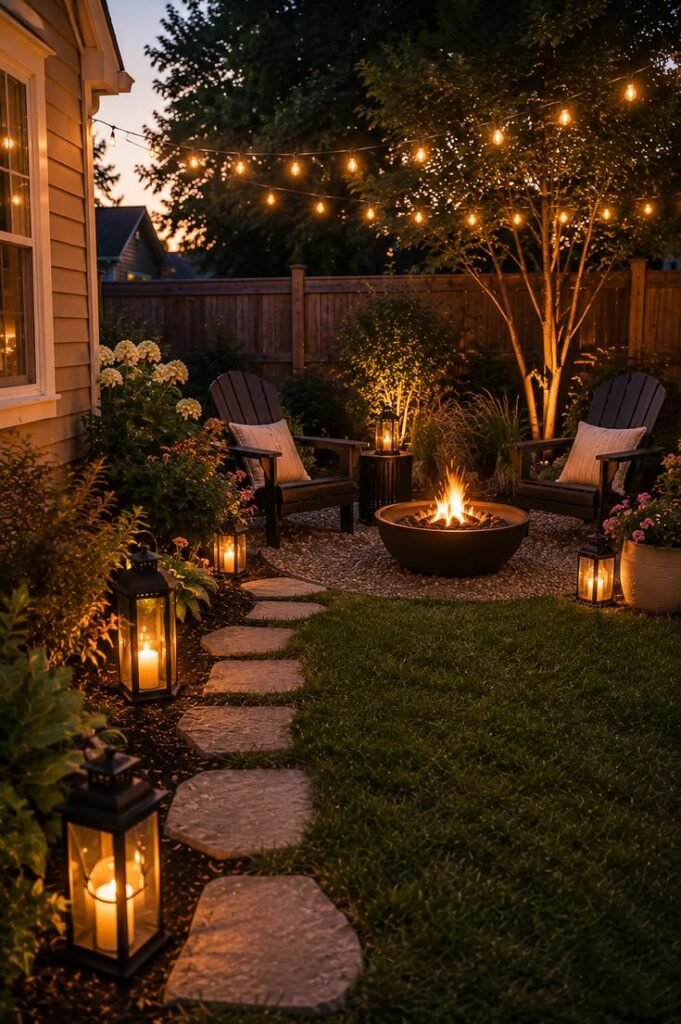
This one’s underrated. Good lighting basically doubles the hours your garden is usable. String lights over the seating area, a few solar stakes along the path, or one lantern in the right spot, any of these can completely change the mood once the sun goes down. A yard that’s beautiful at noon but goes pitch black by 8 p.m. is only earning half its keep.
Uplighting a tree or a big shrub is a favorite trick of mine. That plant you barely glance at during the day suddenly becomes the focal point after dark. Mixing a couple of light types works better than sticking to just one: soft string lights for the mood, something a little brighter along the path so nobody trips, and a subtle uplight or two for drama. It ends up looking more like it happened naturally than like a lighting plan.
What Plants Work Best In Different Backyard Garden Styles?
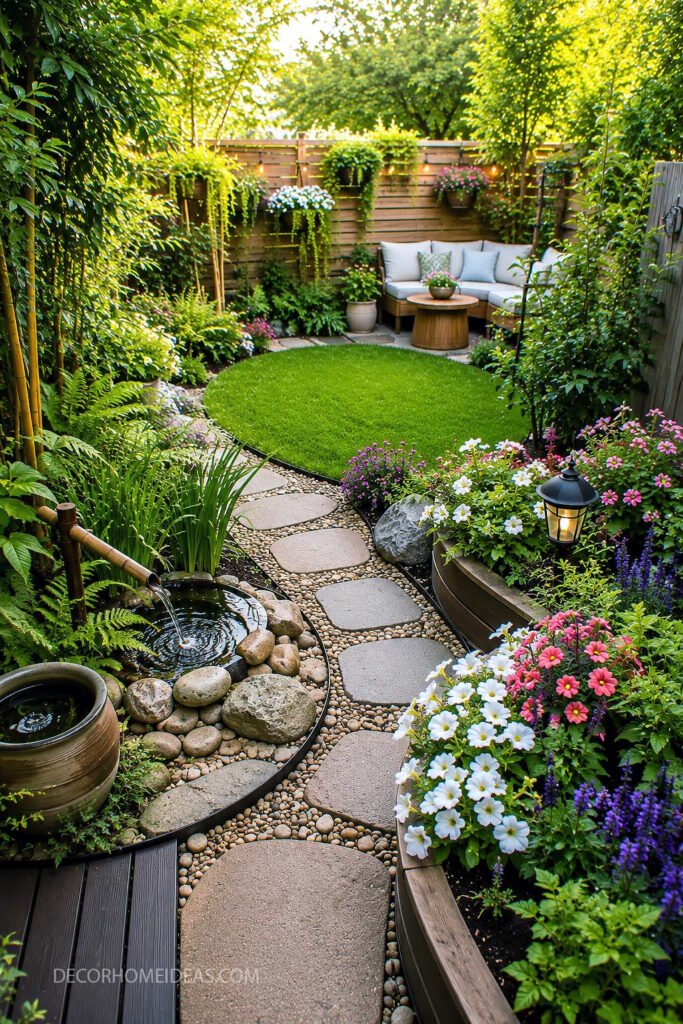
Plant choice really comes down to the overall feel you’re chasing. Mixing plants across different styles almost always looks cluttered, so pick a lane and commit to it. Here’s roughly what tends to work for each direction:
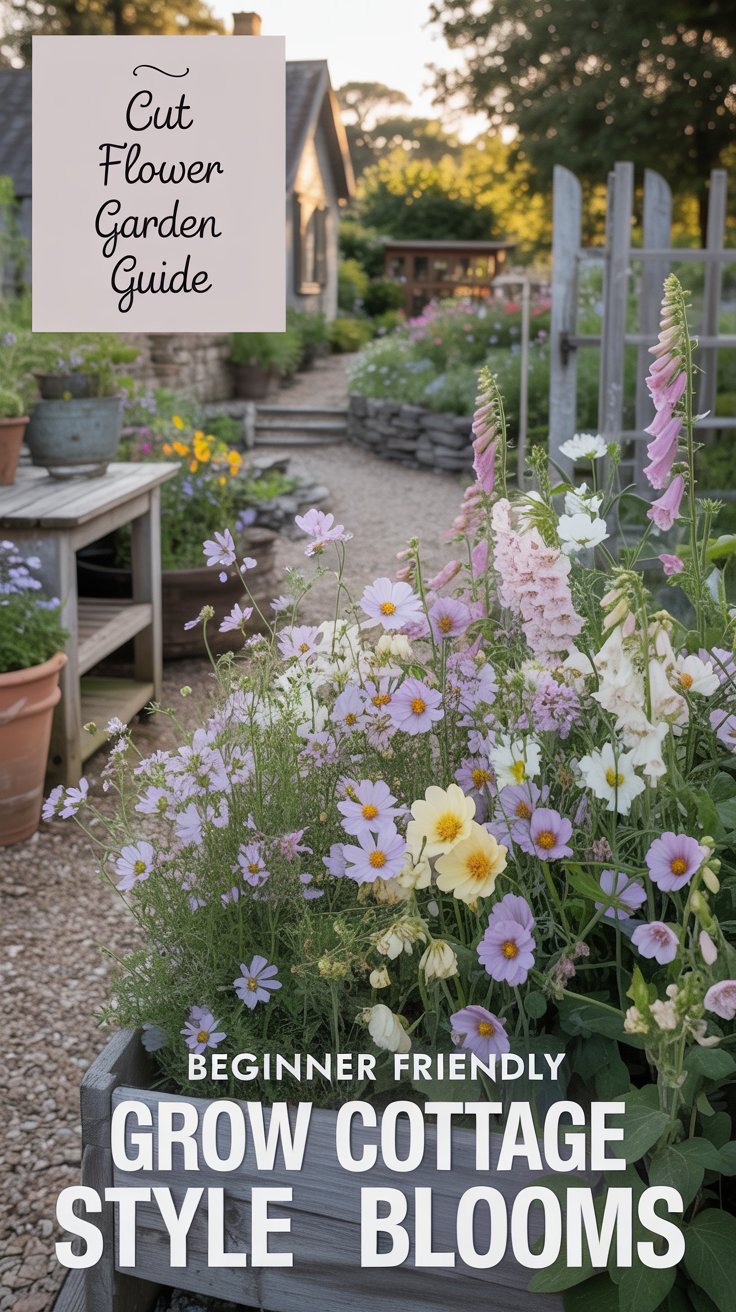
• Cottage garden: roses, foxglove, hydrangea, and self-seeding flowers that fill in a little more, and a little wilder, every year
• Modern minimalist: ornamental grasses, boxwood, and hedges kept in clean, repeated shapes
• Native and drought-tolerant: black-eyed Susan, coneflower, and yarrow have low water needs and the bees love them
• Tropical retreat: elephant ear, canna lily, and hibiscus for big leaves and color that doesn’t apologize for itself
• Herb and kitchen garden: rosemary, thyme, and basil planted close enough to the patio that you’ll actually use them
What Materials Work Well For Backyard Garden Structures?
Whatever you build the hardscape out of ends up saying almost as much as the plants do. Natural stone pavers feel like they’ve always been there. Poured concrete reads cleaner and more modern. Brick lands somewhere in the middle, a good pick if the yard leans traditional but you don’t want it feeling too formal.
Wood is the workhorse for raised beds, pergolas, and fencing, whether that’s cedar, redwood, or a composite. It ages in a way that softens a yard that’s otherwise all stone and concrete. Composite costs more going in, but you skip the yearly sealing that real wood asks for, so it evens out over time.
If money’s tight, gravel is genuinely a good answer, not just a cheap one. It drains well, basically maintains itself, and works fine as a path base or filler between beds. Bigger decorative rock can also mark where one zone ends and another begins, without the cost of laying full pavers.
What Mistakes Do People Make When Planning A Backyard Garden?
The big one is planting before actually checking how much sun a spot gets. A bed that looks perfect in your head can flop if it sits in the shade most of the day. Spend one full day tracking sun and shade, morning, noon, and evening, before you buy anything. It sounds tedious, but it saves a lot of dead plants and wasted trips to the nursery.
Overcrowding is the other classic. Plants look small and harmless in their little nursery pots, then triple in size by the end of one season and start choking out their neighbors. Look up a plant’s mature width, not just how big the pot looks right now, before you decide where it goes. Future you will be grateful.
And don’t skip the soil. It’s not the fun part, so it’s the part everyone rushes past. A few hours working in compost and fixing drainage upfront saves years of wondering why nothing quite thrives. More often than not, patchy plant choices are actually a patchy soil problem in disguise.
How Do You Keep A Backyard Garden Design Looking Good Year-Round?
A garden that only looks alive in June starts to feel abandoned the other nine months. Mixing in evergreens with your seasonal bloomers keeps some shape and structure going even when nothing’s flowering. Think of the evergreens as the bones of the whole design, holding it together through the quiet stretches.
Mulch pulls more weight than people give it credit for. It holds in moisture, keeps weeds down, and just makes beds look finished, even in the in-between months when nothing much is blooming. Refreshing it once or twice a year is a small job with a surprisingly big payoff.
Try to stagger what blooms when: spring bulbs, summer perennials, and something that carries into fall, so there’s rarely a stretch where the whole yard looks like it’s given up for the season. Even small bursts of color scattered across the calendar keep the place feeling lived-in.
How Much Does A Backyard Garden Design Typically Cost?
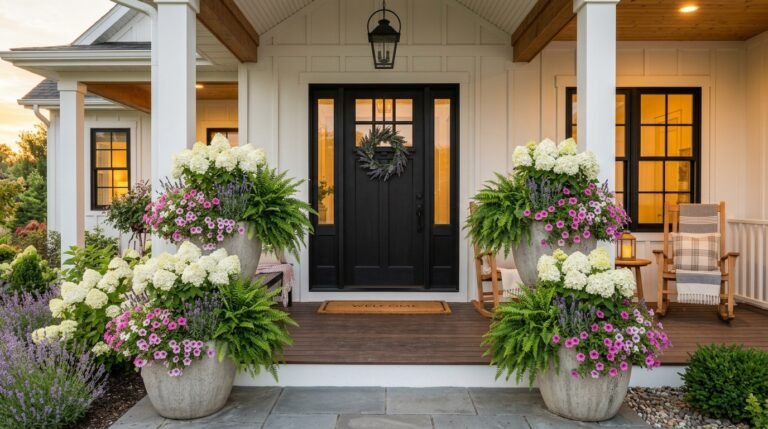
It really depends on how far you want to take it. A simple refresh, some new mulch, a couple perennial beds, and a handful of potted plants by the door can usually happen for the cost of a weekend and a few nursery trips. It’s a solid starting point if you’re not ready to commit to a full overhaul yet.
A step up from there, adding a small patio, raised beds, and basic lighting costs more but tends to actually change how often you use the yard. This is usually the point where a backyard stops being something you glance at from the kitchen window and starts being somewhere you actually go.
The bigger projects, a pergola, retaining walls, and a full irrigation system, sit at the top of the range. Even those don’t have to happen all at once. Spreading the work across two or three seasons keeps the budget sane and honestly gives the garden time to settle in naturally between each phase instead of looking freshly installed.
Start Small And Let The Design Grow With You
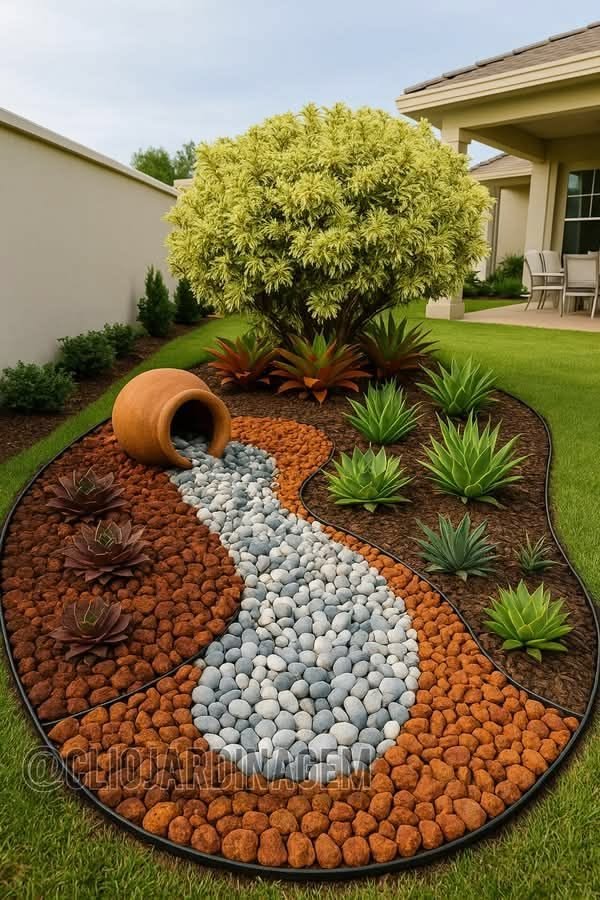
You really don’t need to redo the whole yard in one weekend, and honestly, trying to usually backfires. Pick one zone, a seating corner, a border bed, and a single string of lights, and start there. The backyards that end up looking the best almost always got there over a few seasons, not all at once over one long weekend. Give yourself room to change your mind as you go. What actually works tends to become obvious once you’ve lived in the space a while, not before.
FAQ
How Much Space Do I Need For A Backyard Garden Design?
A 10-by-10-foot corner is plenty for a small seating spot and a planting bed.
What’s The Fastest Way To Update A Garden On A Tight Budget?
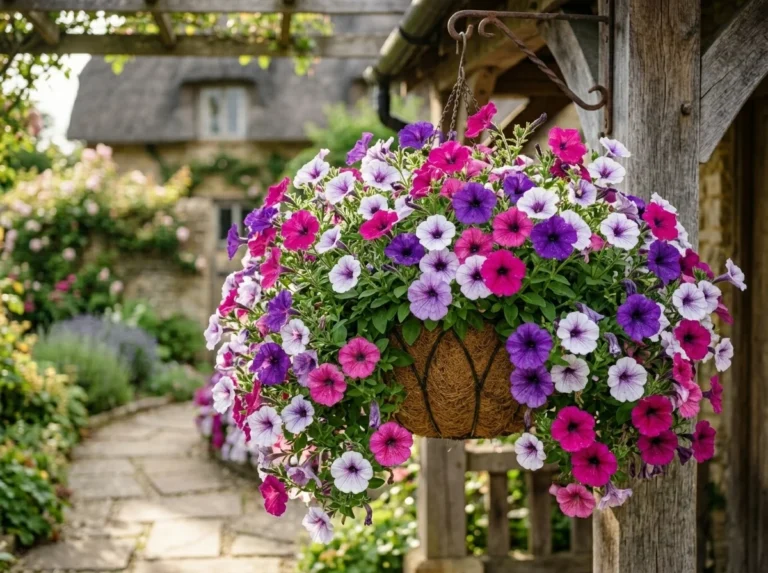
Fresh mulch, a cleaner border edge, and a few potted plants go a long way for very little.
Should Paths Be Straight Or Curved In A Small Yard?
Curved paths almost always make a small yard feel bigger than a straight, direct route.
Do Backyard Gardens Need Irrigation Systems?
Not necessarily. Drought-tolerant and native plants often do fine on rainfall once they’re established.
How Long Does It Take A New Garden Design To Mature?
Give it two to three growing seasons before beds really fill in and look established.
Is Gravel Or Mulch Better For A Low-Maintenance Garden Bed?
Gravel lasts longer without redoing it, but mulch actually feeds the soil as it breaks down.
Can A Backyard Garden Design Include A Vegetable Patch Too?
Definitely. A raised bed near the patio or kitchen door works great for this.