13 Best Hostas for Pots on Shady Porches and Patios
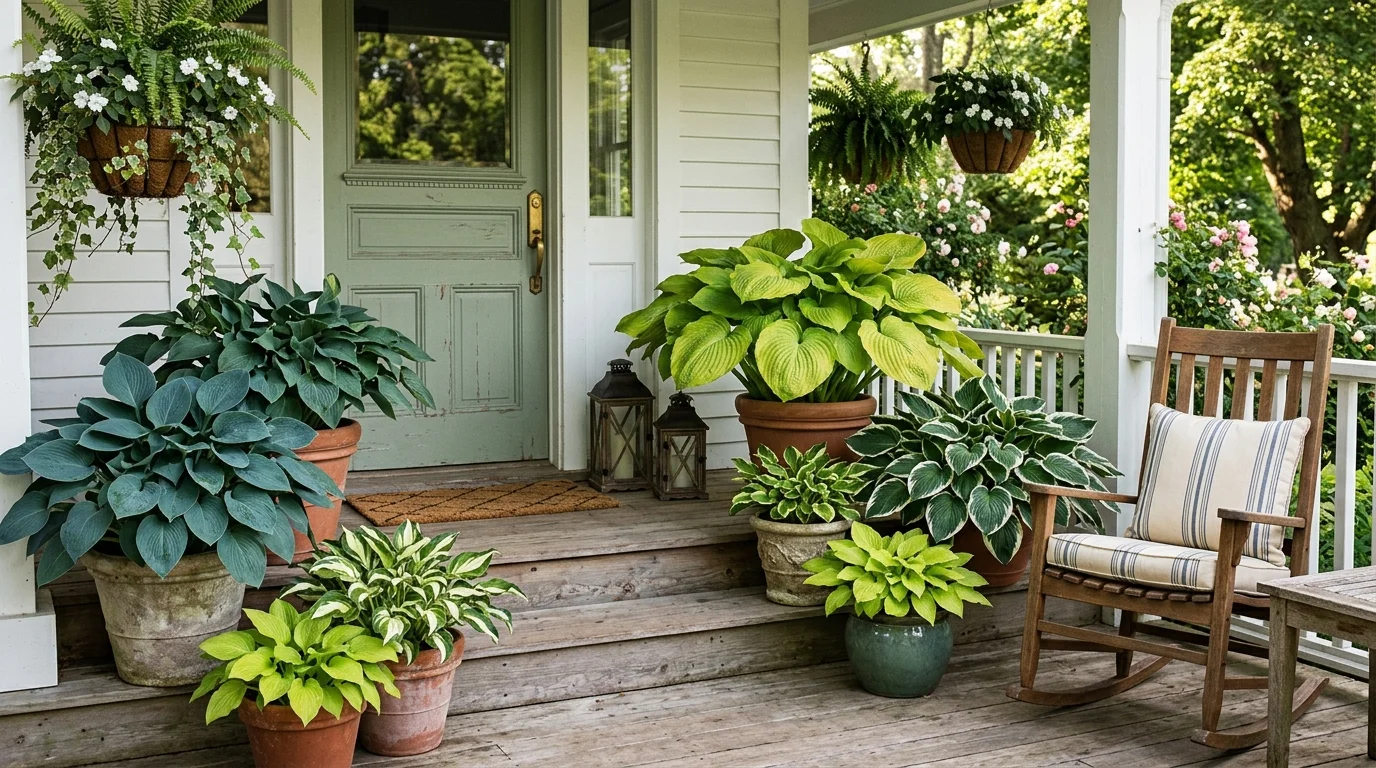
Explore the best hostas for pots on shady porches and patios, from compact varieties for small containers to large statement plants. Discover which hostas offer beautiful colorful foliage, fragrant flowers, and easy-care beauty in low-light spaces. These shade-loving favorites thrive in containers while adding texture, structure, and year-round interest to your outdoor areas. hostas grow very well in pots on shady porches. They need a deep pot, good soil, and steady water.
Why Hostas Do Well In Pots
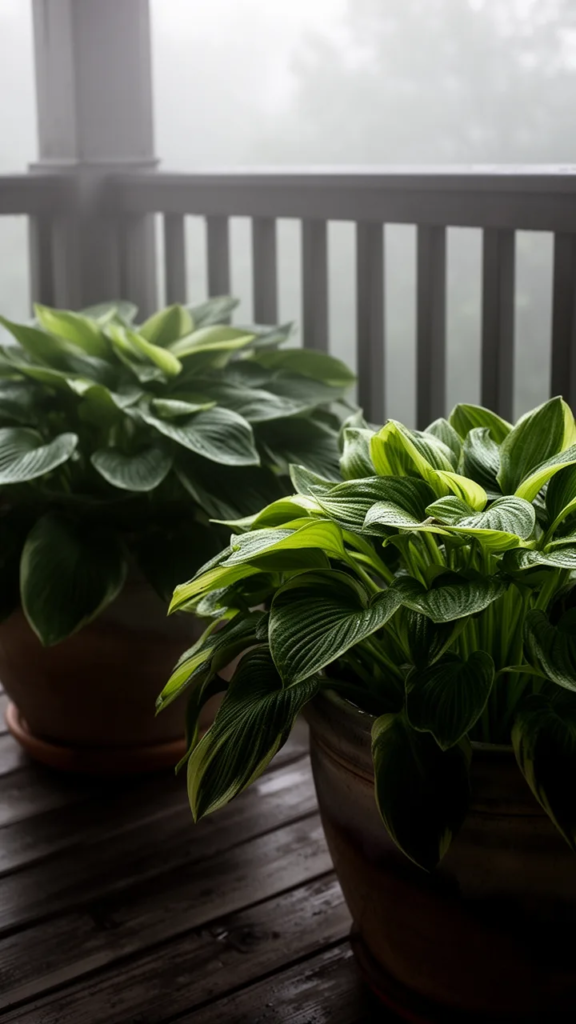
Hostas do well in pots because pots control soil, water, and light. You choose the exact spot for shade. You move the pot when the sun shifts.
- Flexible for moving into deeper shade in summer
- Fewer pests than hostas in the ground
- Neat, dense growth in a small space
- Great for porches, steps, and tight corners
What Size Pot Do Hostas Need?
Hostas need a pot at least 12 inches deep. Width should match the hosta’s full-grown size. Always pick a pot with drainage holes.
- Terracotta: These are good for plants’ breathing activity but dry out fast
- Plastic: They usually holds water for longer period of time, good for hot spots
- Ceramic: They look nice and drain at a steady rate
- Dark pots: dark pots usually warm the soil, which hostas like
Where Should You Place Potted Hostas?
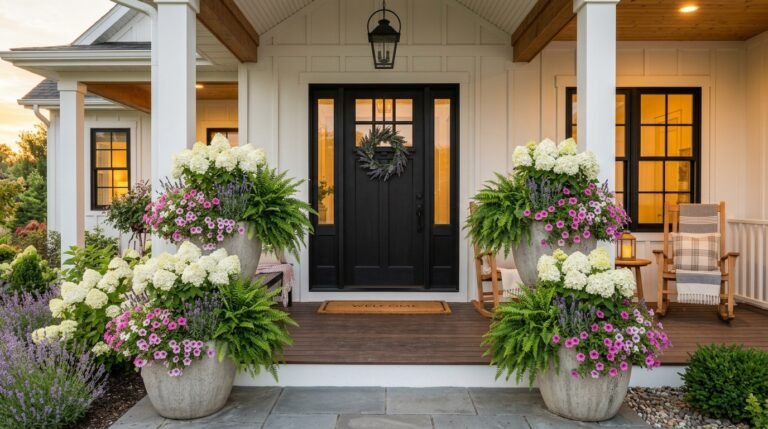
Hostas grow best in those locations where there is plenty of sunlight in the morning and afternoon shade. A covered porch, shaded patio, balcony, or north-facing entrance offers the right amount of light. Too much direct afternoon sun can scorch the leaves, especially on blue-leaf varieties. If there is periodic sunlight on your porch throughout the season, then you have to simply move the container to maintain partial shade accordingly.
Read More – Front Porch Flower Pot Ideas for a Welcoming Entryway
How Long Do Hostas Live In Containers?
Hostas are long-standing flora that can flourish in containers for many years with dedicated care. Refresh the potting mix every few seasons and divide crowded plants when growth slows. Healthy hostas return every spring, producing larger foliage as they mature. Choosing a container with enough room helps reduce the need for frequent repotting.
Can You Mix Hostas With Other Shade Plants?
Hostas pair well with many shade-loving plants in decorative containers. Combining different leaf shapes and colors creates texture without adding extra maintenance. Popular companion plants include ferns, coral bells, caladiums, and Japanese forest grass. Keep plants with similar water needs together for the healthiest container display.
Common Problems With Potted Hostas
Container-grown hostas are generally easy to maintain, but they can still develop a few common problems. Yellow leaves often indicate overwatering, while brown leaf edges usually mean the soil is drying out too quickly. Slugs may occasionally feed on tender leaves, although thick-leaf varieties are more resistant. Regular watering, proper drainage, and good air circulation help prevent most issues.
Do Hostas Need Repotting?
As hostas grow, their roots gradually fill the container. When you notice slower growth, crowded roots, or water running straight through the pot, it’s time to repot. Moving the plant into a slightly larger container with fresh potting mix gives the roots more space and encourages healthy new growth.
Best Time To Plant Hostas In Pots
Spring is the ideal time to plant hostas in containers because the roots establish before the hottest part of summer. Early fall is another good planting season in mild climates. Avoid planting during periods of extreme heat, as newly potted hostas require consistent moisture while they settle into their containers.

How To Keep Potted Hostas Healthy All Season
Healthy hostas need consistent care rather than constant attention. Water deeply instead of lightly, remove damaged leaves when they appear, and keep the soil evenly moist throughout the growing season. Applying a thin layer of mulch on top of the potting mix helps retain moisture and keeps the roots cooler during hot weather.
Are Hostas Good For Small Outdoor Spaces?
Hostas are one of the best foliage plants for compact outdoor areas because they provide lush greenery without requiring full sun. Smaller varieties fit perfectly on apartment balconies, front porches, patios, and entryways, while larger hostas create bold focal points in spacious container gardens. Their wide range of leaf colors and sizes makes it easy to find a variety for almost any shaded space.
What Is The Best Soil Mix For Potted Hostas?
The best mix is potting soil with perlite added. Use three parts soil to one part perlite. This mix drains fast but still holds water.
- Skip heavy garden soil; it packs down in pots
- Add a little compost for extra nutrients
- Water should drain out within seconds
13 Hostas That Grow Well in Containers
1. Sum and Substance
Best for: Large statement containers
Sum and Substance produces huge, bold leaves in shades of green-gold that instantly become a focal point in a shady space. It handles more sun exposure than many hosta varieties but performs best with morning light and afternoon shade. Because of its size, it needs a large, deep pot with rich, moisture-retentive soil.
2. Blue Mouse Ears
Best for: Small pots and tabletop displays
This miniature hosta grows only about 6 to 8 inches tall, making it perfect for small containers on steps, tables, or balcony gardens. Its thick, rounded blue-green leaves add texture without taking over a small space. It prefers consistent moisture and filtered shade.
3. June
Best for: Colorful shaded containers
June features striking gold centers surrounded by blue-green edges. Growing around 12 to 18 inches tall, it provides long-lasting color in dappled shade. Its compact growth habit makes it a reliable choice for porch containers where you want foliage interest throughout the season.
4. Patriot
Best for: Classic container contrast
Patriot hosta has deep green leaves with clean white margins that brighten shady corners. Its strong color pattern holds well throughout the growing season, making it a popular choice for decorative pots near entrances, patios, and walkways.

5. Halcyon
Best for: Low-maintenance containers
Halcyon produces thick, steel-blue leaves with a waxy texture that gives it a unique appearance. Its firm foliage is less attractive to slugs compared with many softer-leaved hostas. It works well in medium-sized pots placed in cool, shaded areas.
6. Fragrant Bouquet
Best for: Evening porches
Fragrant Bouquet combines bright green foliage with sweet-smelling flowers that appear during summer. It is an excellent choice for patios and porches where you spend evenings outdoors. Provide regular watering and partial shade for the best growth.
7. Fire and Ice
Best for: Bold foliage displays
Fire and Ice stands out with creamy white centers surrounded by dark green edges. Its high-contrast leaves create visual impact even when flowers are not blooming. Plant it in a decorative container where its dramatic foliage can be appreciated up close.
8. Undulata Mediovariegata
Best for: Texture and movement
This variety features wavy, ruffled leaves with soft cream centers and green edges. The flowing foliage adds movement to container arrangements and pairs well with ferns, coral bells, and other shade-loving plants.
9. Krossa Regal
Best for: Narrow spaces
Krossa Regal grows taller and more upright than many hostas, making it ideal for slim containers near doors, steps, or narrow patios. Its blue-green leaves create height without requiring a wide planting area.
10. Tuscan Sun
Best for: Brightening dark corners
Tuscan Sun produces glowing yellow-green leaves that bring warmth to shaded locations. Its lighter foliage contrasts beautifully with darker hostas and other shade plants in mixed containers.
11. Guacamole
Best for: Fragrant container gardens
Guacamole has glossy green leaves with pale centers and produces fragrant flowers similar to Fragrant Bouquet. Its attractive foliage and pleasant scent make it a great choice for patios and seating areas.
12. Empress Wu
Best for: Large outdoor containers
Empress Wu is one of the largest hostas available, producing massive blue-green leaves that create a tropical appearance. It requires a strong, oversized container and plenty of moisture to support its impressive growth.
13. Little Aurora
Best for: Small mixed containers
Little Aurora features bright golden leaves that remain colorful in shady conditions. Its compact size makes it ideal for small pots or mixed container gardens alongside other shade-loving plants.
Tips for Growing Hostas Successfully in Pots
- Choose containers with drainage holes to prevent root rot.
- Use rich, moisture-retaining potting soil.
- Keep pots evenly watered, especially during hot weather.
- Place most hostas in partial to full shade.
- Refresh soil nutrients with compost or slow-release fertilizer each spring.
- Protect containers from extreme winter temperature changes.

How Often Should You Water Potted Hostas?
Water potted hostas when the top inch of soil feels dry. Check often during warm months.
- Spring and summer: water every 2 to 3 days
- Fall: water every 4 to 5 days
- Winter: water every 7 to 10 days
- After rain: skip watering and check drainage
Which Hosta Fits Your Space?
The right hosta depends on your pot size and light. Match the variety to your exact spot.
- Small pot or tight corner: Blue Mouse Ears, Little Aurora
- Deep shade: Sum and Substance, Patriot
- Narrow space: Krossa Regal
- Want fragrance: Fragrant Bouquet, Guacamole
- Want a bold focal point: Empress Wu, Fire and Ice
A glimpse on viruses that infect hostas
Hosta leaves and stems are eaten by deer, rabbits, slugs, and snails. The roots and rhizomes are eaten by voles. All of these animals can cause extensive damage to collections in gardens. Some varieties seem more resistant to slug damage, which is more prevalent later in the growing season, than others. Insect pests include vine weevils and cutworms.
Foliar nematodes, which leave streaks of dead tissue between veins, have become an increasing problem where pesticide use has decreased. A potexvirus called ‘Hosta Virus X’ was first identified in Minnesota in 1996.
Plants that are infected are destroyed to prevent its spread, as the disease can be transmitted from plant to plant by contaminated sap. Symptoms include dark green “ink bleed” marks in the veins of yellow-colored leaves and/or tissue collapse between veins.
It can take years for symptoms to show, so symptomless plants in infected batches should also be considered infected.
Other viruses that infect hostas include Tomato Ringspot Virus, Impatiens Necrotic Spot Virus, Tobacco Rattle Virus, Cucumber Mosaic Virus, and several unidentified viruses. Fungal diseases that affect hosta include crown rot caused by Fusarium hostae. It causes stunting and late emergence of the plants, leaf chlorosis, browning, and necrosis.
Grow Beautiful Hostas in Pots at your residence now!
Hostas are herbaceous perennial plants. Hostas thrive in containers when they have the right pot, well-draining soil, consistent moisture, and plenty of shade.
Choose a variety that fits your space, and you’ll enjoy healthy, vibrant foliage that brightens your porch or patio for years.