
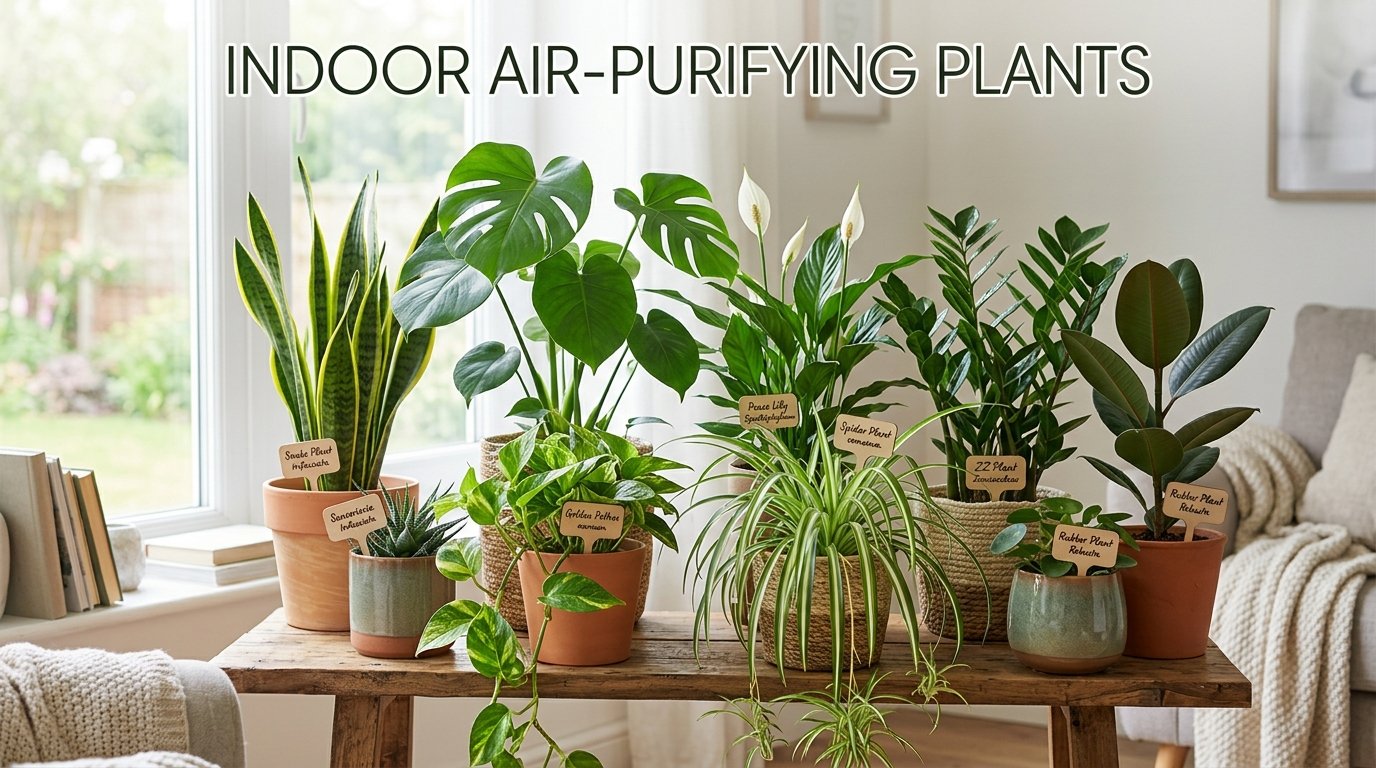
11 Best Indoor Air-Purifying Plants for Every Room
Are you the one looking for air-purifying plants? Or in quest of plants that make your environment cleaner? Enter into a room filled with healthy green plants, and you’ll observe something different. The space feels calmer, fresher, and more welcoming. Indoor plants play a more important role than decorating shelves or brightening empty corners; they create a culture, an environment that feels alive, lively, and welcoming.
The purpose of an ordinary plant is to inhale carbon dioxide and release oxygen, making the environment breathable and full of oxygen. It is said that one fully grown or mature tree fulfills the oxygen requirement of almost 10 people. Although they shouldn’t replace proper ventilation or a high-quality air purifier, air-purifying plants can become an important part of a healthier indoor lifestyle.
A glimpse on NASA’s famous Clean Air Study
The idea gained worldwide attention after NASA’s famous Clean Air Study explored that several common houseplants could eliminate volatile organic compounds (VOCs) such as formaldehyde, benzene, xylene, and trichloroethylene from enclosed spaces. Since then, homeowners have adopted the practice of planting these plants for both their practical benefits and endless aesthetic sense.
Your residence area can be a compact apartment, you can work from a home office, or you can simply want to create a greener living space; picking the right houseplants can make every room feel more comfortable while adding natural elegance.
Why Indoor Air Quality Matters
Nowadays most of the people are spending 90% of their time indoors. While staying indoors, they’re vulnerable to and experiencing pollutants released by furniture, cleaning products, paints, carpets, electronics, and building materials.
Common indoor pollutants include:
- Formaldehyde
- Benzene
- Xylene
- Toluene
- Trichloroethylene
- Carbon monoxide (in certain environments)
When indoor quality is poor, it may lead to headaches, allergies, dry eyes, fatigue, irritation, nausea, sadness, anxiety, and respiratory irritation. While opening windows and maintaining good ventilation remain the most effective ways to enhance indoor air. However, adding specific plants introduces another natural layer of support while making your home feel brighter and more relaxing. So, one needs to add specific plants in enclosed spaces in order to avoid many problems.
How Do Air-Purifying Plants Work?
It is a fact that Plants naturally absorb carbon dioxide through tiny openings in their leaves called stomata. During this process, they can also absorb certain airborne pollutants.
At the same time, microorganisms living around the plant’s roots help break down harmful compounds found in indoor air. Together, the plant and its root system contribute to cleaner indoor environments.
Many indoor plants also:
- Increase humidity naturally
- Reduce airborne dust
- Produce oxygen
- Help create a calmer atmosphere
- Improve the overall appearance of a room
While scientists agree that plants alone cannot completely purify the air inside a modern home, they remain an excellent addition to healthy living habits.
1. Whale Fin Sansevieria

Care Level: Easy
The Whale Fin Sansevieria is one of the most striking varieties of snake plants. Instead of producing multiple narrow leaves, it grows one or two enormous paddle-shaped leaves that resemble a whale’s fin rising from the ocean.
Its sculptural appearance makes it perfect for modern interiors, minimalist homes, and office spaces where a single plant can become the focal point.
Like other members of the Sansevieria family, it tolerates neglect remarkably well. It stores water inside its thick leaves, allowing it to survive weeks without watering.
Why You’ll Love It
- Aids in removing pollution indoors
- Best beginner plants
- Grow in low light or indirect light
- Best drought tolerant
- Adds dramatic architectural style
Care Tips
Allow the soil to dry completely before watering. Use a cactus or succulent potting mix with excellent drainage, and avoid letting water sit around the roots.
2. Anthurium ‘Veitchii’ (King Anthurium)

Care Level: Medium
The King Anthurium is a spectacular tropical houseplant famous for its enormous rippled leaves that can eventually reach four feet long.
Unlike flowering anthuriums, Veitchii is grown almost entirely for its dramatic foliage. Every mature leaf develops deep corrugations that give it an elegant, luxurious appearance.
Because it’s native to tropical rainforests, this plant appreciates warm temperatures, high humidity, and bright filtered sunlight.
Why You’ll Love It
- Best in creating tropical environment
- Enhance the humidity
- Excellent stance plan
- Perfect for bathrooms and sunrooms
- Stunning textured foliage
Care Tips
Control humidity above 60% whenever possible. Water when the top inch of soil becomes dry, and avoid placing it in direct afternoon sunlight.
3. Dieffenbachia

Care Level: Medium
These are called dumb cane, or Dieffenbachia, one of the most popular indoor foliage plants thanks to its large cream-and-green patterned leaves.
Beyond its attractive appearance, Dieffenbachia has long appeared on lists of plants known for helping reduce indoor pollutants. It’s especially well suited to kitchens, offices, and living rooms where decorative greenery is needed.
Its lush foliage quickly fills empty corners, creating a vibrant indoor jungle effect.
Benefits
- Excellent at absorbing indoor toxins
- Big decorative leaves
- Quick growing capacity
- Excellent for medium-light rooms
- Adds tropical character
Care Tips
Keep the soil lightly moist without becoming soggy. Wipe dust from the leaves every few weeks to improve photosynthesis and discourage pests.
Note: Dieffenbachia is toxic if ingested, so keep it away from pets and small children.
4. Alocasia ‘Tiny Dancer’

Care Level: Easy
It has long, graceful stems topped by rounded leaves; Alocasia Tiny Dancer looks exactly as its name suggests. Each leaf appears to dance gently above the plant, adding movement and elegance to any room.
Unlike larger elephant ear varieties, this compact Alocasia fits comfortably on desks, shelves, or side tables.
Its playful appearance makes it an excellent conversation piece while still being relatively easy to maintain.
Why It Stands Out
- Compact size
- extraordinary leaf shape
- Bright tropical appearance
- Perfect for apartments
- Easy to handle ascompared to many Alocasias
Care Tips
Provide bright indirect light and moderate humidity. Water whenever the top inch of soil begins drying but avoid waterlogged roots.
5. Geogenanthus

Care Level: Easy
Geogenanthus is one of the most underrated indoor houseplants. Instead of traditional green foliage, its glossy leaves display deep shades of emerald mixed with rich purple tones.
Its compact growth habit makes it perfect for coffee tables, bookshelves, or office desks where colorful foliage can make a subtle yet sophisticated statement.
The thick leaves retain moisture well, allowing the plant to tolerate occasional missed waterings.
Why You’ll Love It
- Rich purple foliage
- Compact growth
- Easy maintenance
- Excellent tabletop plant
- Adds color without flowers
Care Tips
Keep it in bright, indirect light and water only after the upper layer of soil has dried.
6. Pink Polka Dot Plant

Care Level: Medium
If you’re looking for something playful and colorful, the Pink Polka Dot Plant is hard to beat.
Its bright green leaves are sprinkled with vibrant pink markings that instantly brighten indoor spaces. Despite its delicate appearance, it’s surprisingly rewarding when given the right environment.
Because it enjoys humidity, it’s especially suited for bathrooms, kitchens, and indoor terrariums.
Benefits
- Bright colorful foliage
- Great for small apartments
- Excellent accent plant
- Compact growth
- Adds contrast among green houseplants
Care Tips
Provide bright filtered light, moderate watering, and higher humidity. Pinching back new growth helps the plant stay full and bushy instead of becoming leggy.
7. Alocasia Melo

Care Level: Medium
Alocasia Melo is admired for its thick, textured leaves that almost look as though they’ve been carved from stone. Its compact size and sculptural appearance make it a favorite among indoor plant enthusiasts who want something different from traditional leafy houseplants.
Native to tropical forests, this plant thrives in warm temperatures with bright, indirect sunlight. Although it grows more slowly than many other houseplants, every new leaf becomes an impressive feature that adds depth and character to a room.
Why You’ll Love It
- Unique textured foliage
- Compact growth habit
- Perfect statement plant for shelves
- Adds tropical elegance
- Long-lasting leaves
Care Tips
Place Alocasia Melo in bright, filtered light and keep humidity levels above average. Water when the top inch of soil feels dry, ensuring excess water drains freely to prevent root rot.
8. Norfolk Pine
Care Level: Easy
Despite its name, the Norfolk Pine isn’t a true pine tree, but it certainly looks the part. Its soft, symmetrical branches bring year-round greenery indoors and become especially popular during the holiday season.
Unlike many indoor trees that require constant attention, Norfolk pines adapt well to home environments with moderate care. It grows slowly indoors and can remain a beautiful focal point for years.
Besides adding visual height to a room, its lush evergreen foliage contributes to a fresher indoor atmosphere while naturally increasing humidity.
Benefits
- Elegant indoor tree
- Year-round greenery
- Beginner-friendly
- Helps maintain indoor humidity
- Perfect for living rooms and entryways
Care Tips
Keep the soil slightly moist but never soggy. Place it near a bright window where it receives indirect sunlight throughout the day. Rotate the pot occasionally to encourage even growth.
9. Calathea ‘White Fusion’

Care Level: Easy
Calathea White Fusion is one of the most beautiful foliage plants available today. Its leaves display artistic streaks of green, white, and soft lavender underneath, creating an almost painted appearance.
Like other prayer plants, its leaves gently lift during the evening and relax again each morning, making it fascinating to watch throughout the day.
Its elegant coloring makes it an excellent addition to bedrooms, offices, and minimalist interiors.
Why You’ll Love It
- Stunning variegated foliage
- Naturally increases humidity
- Pet-friendly
- Compact and decorative
- Adds movement to indoor spaces
Care Tips
Use filtered or distilled water whenever possible, as Calatheas can be sensitive to minerals found in tap water. Maintain high humidity and avoid direct sunlight that may scorch the delicate leaves.
10. Bay Laurel Tree

Care Level: Easy
Bay Laurel is one of the few indoor plants that combines beauty with everyday usefulness. Its glossy evergreen leaves create an elegant appearance while providing fresh bay leaves for soups, sauces, and stews.
Growing Bay Laurel indoors allows homeowners to enjoy a compact ornamental tree that remains attractive throughout the year.
Its pleasant fragrance also adds another sensory element to kitchens and dining spaces.
Benefits
- Edible culinary leaves
- Evergreen beauty
- Easy to prune
- Long lifespan
- Ideal kitchen companion
Care Tips
Provide bright sunlight for several hours each day and allow the soil to dry slightly between waterings. Occasional pruning helps maintain its compact shape.
11. Red Chinese Evergreen

Care Level: Easy
The Red Chinese Evergreen combines excellent durability with vibrant red and green foliage that instantly brightens darker rooms.
Its colorful leaves provide visual interest year-round, even in offices or homes with limited natural sunlight.
In addition to being one of the easiest houseplants to grow, it has long been recognized as a plant that contributes to healthier indoor environments by helping reduce certain airborne pollutants.
Benefits
- Beautiful red foliage
- Thrives in low light
- Beginner-friendly
- Low maintenance
- Suitable for offices and apartments
Care Tips
Water when the top inch of soil becomes dry and avoid direct afternoon sun. Remove any yellow leaves to encourage healthy new growth throughout the year.
Tips for Arranging Air-Purifying Plants Throughout Your Home
Choosing the right plant is only part of the equation. Placing them strategically throughout your home helps maximize both their visual appeal and their growing success.
Living Room
Large statement plants like Norfolk Pine or Alocasia Melo work beautifully beside sofas, entertainment centers, or large windows, where they create natural focal points.
Bedroom
Snake plant varieties, including Whale Fin Sansevieria, are excellent bedroom choices because they continue releasing oxygen during the night.
Bathroom
Humidity-loving plants such as Anthurium Veitchii, Calathea White Fusion, and Christmas Cactus often thrive in bathrooms where steam from showers creates ideal growing conditions.
Home Office
Compact plants like Geogenanthus, pink polka dot plants, or Dieffenbachia add life to workspaces without taking up excessive desk space.
Common Mistakes to Avoid
Even easy-care houseplants can struggle if their basic needs aren’t met.
Avoid these common mistakes:
- Overwatering plants that prefer dry soil.
- Placing low-light plants in direct afternoon sun.
- Ignoring humidity requirements for tropical species.
- Allowing dust to build up on leaves.
- Using pots without drainage holes.
- Fertilizing too frequently during winter.
Healthy plants not only look better but also perform their natural air-cleaning processes more efficiently.
Plant Indoor air-purifying plants for clean environment
Indoor air-purifying plants bring together natural beauty, cleaner indoor environments, and a soothing atmosphere in every room. While they aren’t a replacement for proper ventilation or air purifiers, they favor healthier living when paired with good indoor care.


One Comment