Indoor Plant Watering Guide 2026: How Often And How Much To Water Houseplants
Watering seems like the simplest part of plant care. It is also the part that kills the most houseplants. Too much water suffocates roots. Too little leaves them dry and stressed. This guide breaks down exactly how to water indoor plants so they thrive instead of just survive.
Why Watering Is The Hardest Skill In Plant Care
Every plant has different water needs. A succulent and a fern do not want the same treatment. On top of that, factors like pot size, light levels, humidity, and season all change how fast soil dries out. There is no single schedule that works for every plant in every home. Learning to read your plant and its soil matters more than following a fixed calendar.
How To Know When To Water the Plants
The finger test is the most reliable method. Push a finger about two inches into the soil. If it feels dry at that depth, water the plant. If it feels moist, wait a few more days and check again.
For a more precise reading, use a moisture meter. Insert the probe near the root zone and check the reading before deciding. This works especially well for larger pots where the surface can look dry while the deeper soil is still wet.
Lifting the pot is another useful trick. A dry pot feels noticeably lighter than a freshly watered one. Over time, you will learn the weight difference for each of your plants.
What are the Signs of Overwatering plants?
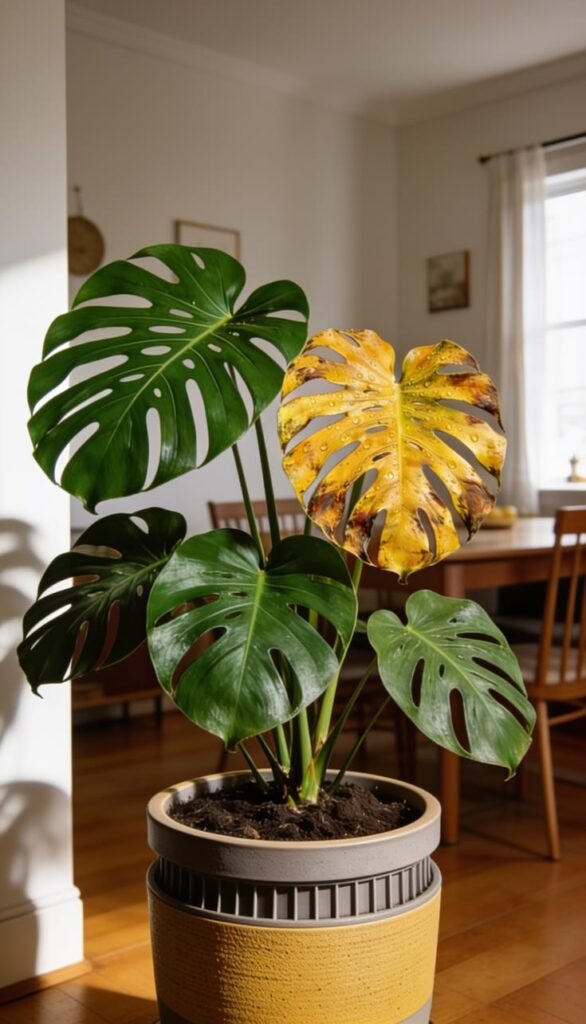
Overwatering is the number one cause of houseplant death. Watch for these signs.
Yellowing leaves that feel soft or mushy usually point to too much water. Roots that turn brown and mushy instead of firm and white confirm the problem. A persistent musty smell coming from the soil is another red flag. Soil that stays wet for more than a week after watering means drainage or watering frequency needs adjusting.
What are the Signs of underwatering plants?
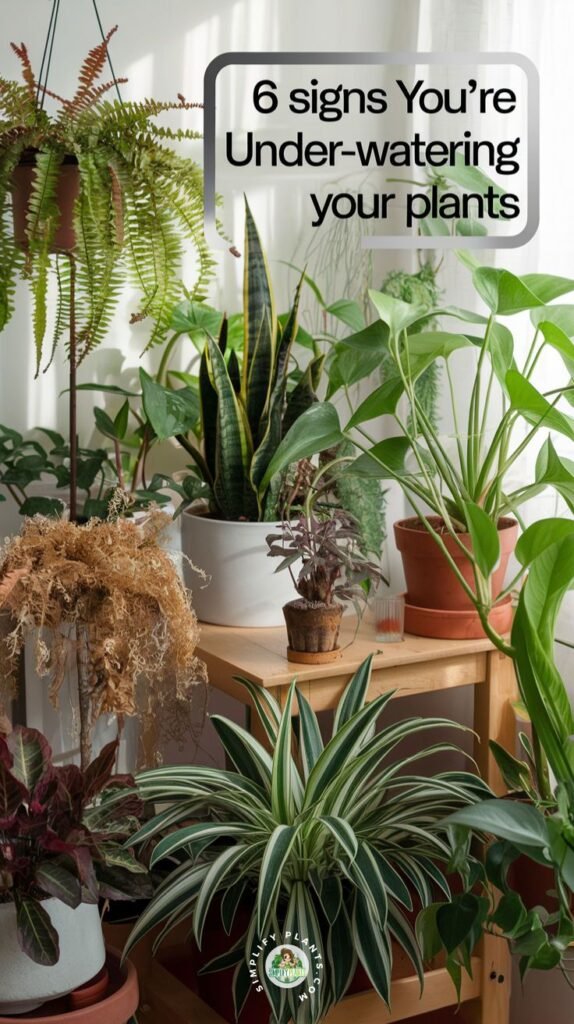
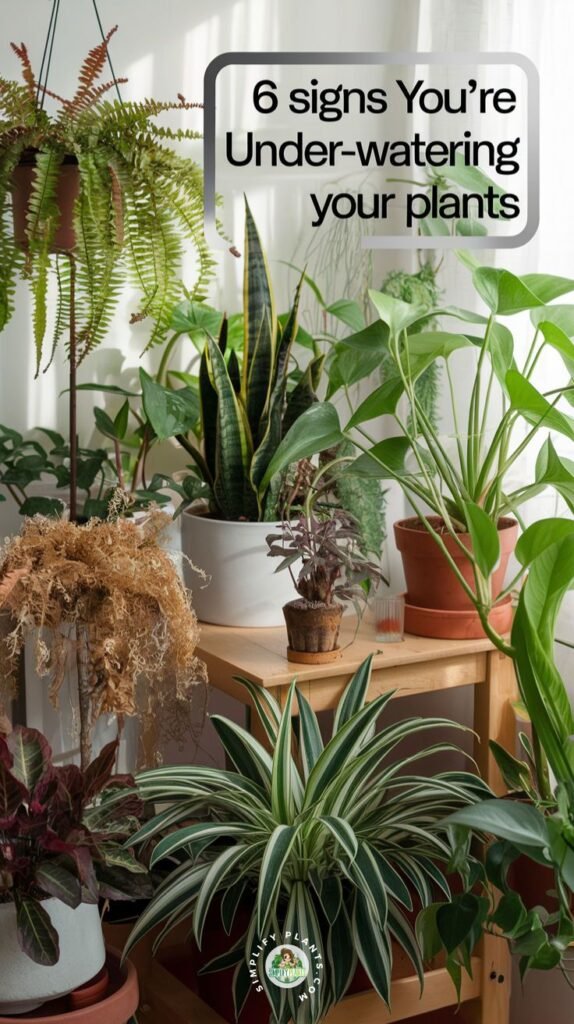
Underwatered plants show different symptoms. Leaves that turn crispy, curl inward, or develop dry brown edges are common signs. Soil that pulls away from the sides of the pot indicates it has dried out completely. Wilting that improves shortly after watering confirms the plant simply needed more water, not less light or a bigger pot.
Watering Techniques That Actually Work:
Bottom Watering
Place the pot in a tray or basin filled with a few inches of water. Let the plant soak up moisture through the drainage holes for 20 to 30 minutes. This method encourages deeper root growth and prevents water from sitting on the topsoil, which can lead to fungus gnats and mold.
Top Watering:
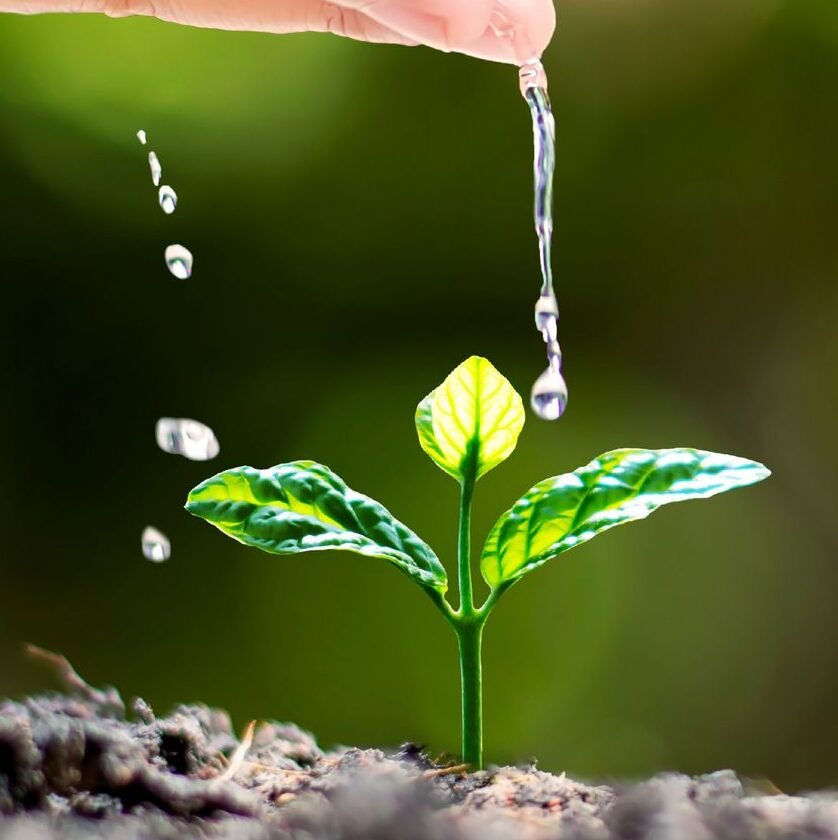
Pour water slowly and evenly across the soil surface until it flows out the drainage holes. This is the most common method and works well for most houseplants. Always discard excess water from the saucer so roots are not left sitting in it.
Misting
Misting adds humidity to the air around a plant but does not replace watering the soil. It works well for tropical plants like ferns and calatheas that prefer higher humidity, but it should never be treated as the plant’s main water source.
How Often Should You Water Different Plant Types
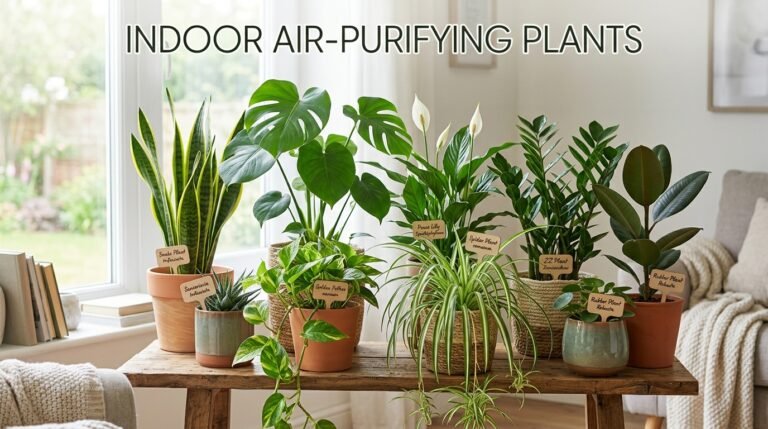
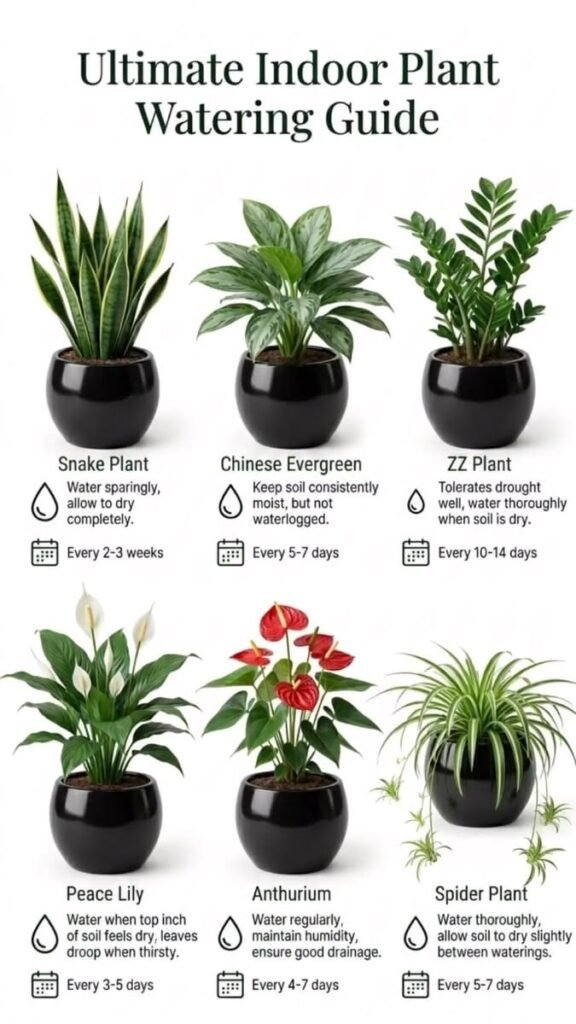
Succulents and cacti need water only when the soil is completely dry, often every two to three weeks. Tropical foliage plants like pothos and philodendrons usually need water every seven to ten days. Ferns and calatheas prefer consistently moist soil and may need water every four to five days. Snake plants and ZZ plants are highly drought tolerant and can go two to four weeks between waterings.
These are starting points, not fixed rules. Always check the soil before watering rather than watering on a strict schedule.
A Glimpse at Seasonal Watering Changes
Plants slow their growth in fall and winter, which means they need less water during these months. Reduce watering frequency and always check soil moisture before adding more. In spring and summer, most plants enter active growth and need more frequent watering. Increase your checks accordingly and watch for faster soil drying, especially near sunny windows.
The Role of Pot Drainage
A pot without drainage holes makes overwatering almost unavoidable. Water has nowhere to go, so it sits at the bottom and drowns the roots. Always choose pots with drainage holes, or keep plants in a plastic nursery pot with holes and place that inside a decorative outer pot without holes. This gives you the best of both looks and function.
Water Quality Matters
Tap water is fine for most houseplants, but if your water is heavily chlorinated or has a lot of dissolved minerals, letting it sit out for 24 hours before use can help. Plants sensitive to fluoride, like spider plants and dracaenas, may develop brown leaf tips from tap water over time. Filtered or rainwater is a safer choice for these species.
Every plant has different water needs. A succulent and a fern do not want the same treatment. On top of that, factors like pot size, light levels, humidity, and season all change how fast soil dries out. There is no single schedule that works for every plant in every home. Learning to read your plant and its soil matters more than following a fixed calendar.
How To Know When To Water the Plants
The finger test is the most reliable method. Push a finger about two inches into the soil. If it feels dry at that depth, water the plant. If it feels moist, wait a few more days and check again.
For a more precise reading, use a moisture meter. Insert the probe near the root zone and check the reading before deciding. This works especially well for larger pots where the surface can look dry while the deeper soil is still wet.
Lifting the pot is another useful trick. A dry pot feels noticeably lighter than a freshly watered one. Over time, you will learn the weight difference for each of your plants.
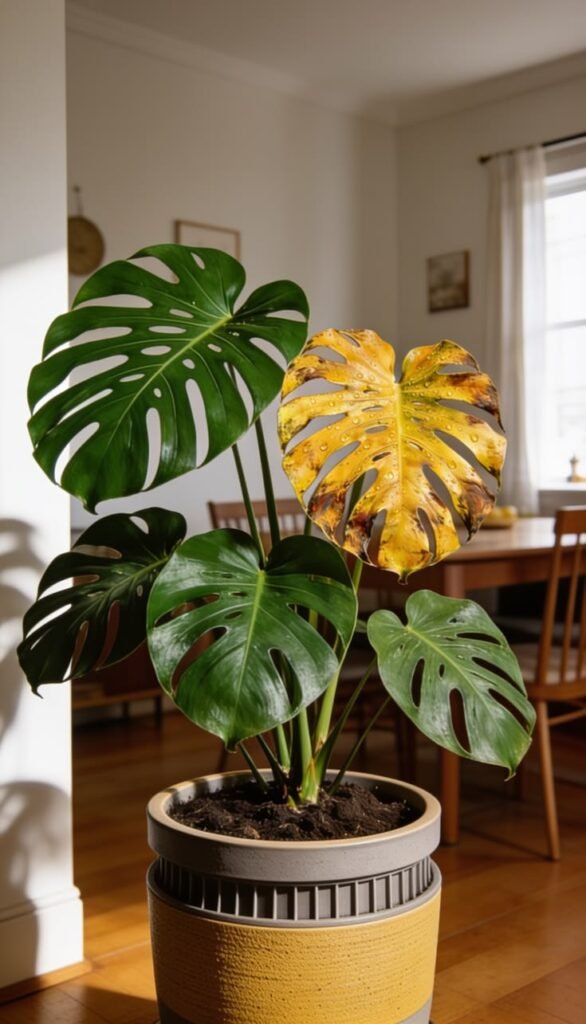
Overwatering is the number one cause of houseplant death. Watch for these signs.
Yellowing leaves that feel soft or mushy usually point to too much water. Roots that turn brown and mushy instead of firm and white confirm the problem. A persistent musty smell coming from the soil is another red flag. Soil that stays wet for more than a week after watering means drainage or watering frequency needs adjusting.
What are the Signs of underwatering plants?
Conclusion:
In a nutshell, Getting watering right takes a bit of observation, but once you learn how your specific plants behave, it becomes second nature. Pay attention to the soil, the leaves, and the season, and your houseplants will reward you with steady, healthy growth. Grow plants and stay healthy and wealthy.
How Do I Know If My Plant Is Overwatered Or Just Needs More Light?
Overwatered plants usually show soft, yellowing leaves and wet soil that has not dried in over a week. Plants needing more light tend to stretch toward the nearest window and grow slowly without showing wet, mushy symptoms.
Can I Set A Fixed Watering Schedule For All My Plants?
No. Each plant has different water needs based on species, pot size, and light exposure. Checking soil moisture before watering is far more reliable than following a fixed calendar.
Is It Better To Underwater Or Overwater A Plant?
Underwatering is easier to recover from. A dry plant perks up quickly once watered, while an overwatered plant may already have root rot that is harder to reverse.
Should I Water My Plants With Cold Water?
Cold water can shock tropical plant roots. Room-temperature water is best, especially in winter months.
How Long Can A Houseplant Go Without Water?
This depends heavily on the species. Succulents can go several weeks, while thirsty tropical plants may wilt within a few days. Checking soil moisture regularly is the safest way to avoid both extremes.