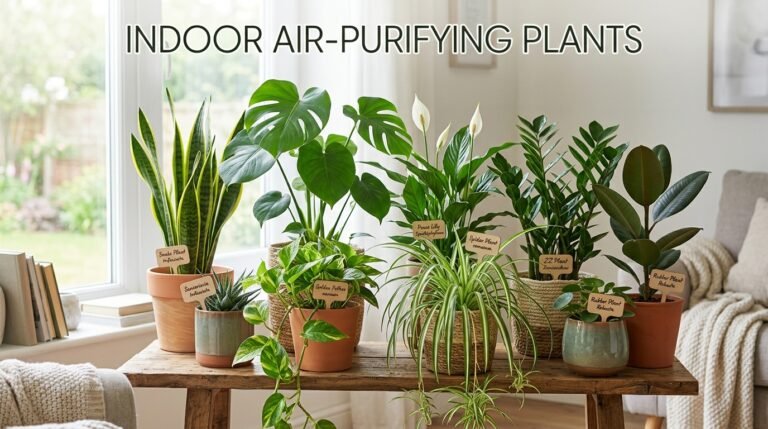
Snake Plant Care: The Complete Guide To Watering, Light, And Soil
A snake plant will survive almost anything you throw at it, but surviving and actually thriving are two different things. Give it the right water, light, and soil, and it rewards you with tall, sculptural leaves that barely need attention for months at a time. Get those basics wrong, even slightly, and the most common problems, mushy roots and floppy leaves, start to show up fast. Indoor plants require an extra bit of care to survive and thrive. This guide covers everything a snake plant actually needs, plus a few details most care guides skip entirely.
How Often Should You Water A Snake Plant?
Water a snake plant only when the soil is completely dry all the way through, which usually works out to once every two to four weeks depending on your home’s light and humidity. This is a semi-succulent plant, and its thick leaves already hold a reserve of water, so it doesn’t need a drink on a fixed schedule the way a fern or a peace lily would.
The finger test still works, but it only tells you about the top inch of soil. Push your finger or a wooden skewer down two to three inches. If it comes out with any damp soil clinging to it, wait. When you do water, soak the pot thoroughly until water runs from the drainage hole, then let it drain completely, and don’t let the pot sit in a saucer of standing water.
● Underwatered signs: Leaves feel thin, start to curl inward, or develop soft wrinkles along their length.
● Overwatered signs: Leaves turn yellow at the base, feel mushy to the touch, or the whole leaf collapses and falls over.
● Seasonal adjustment: Cut watering back by roughly half in fall and winter, when growth slows and the plant uses far less water.
What Kind Of Light Does A Snake Plant Need?
A snake plant grows fastest in bright, indirect light, but it will hold on in a dim corner for months, which is exactly why it has such a strong beginner reputation. What changes with light isn’t survival; it’s growth rate and, in variegated varieties, how much of that yellow or white edging stays visible. In low light, variegated types slowly lose contrast and revert toward solid green.
Direct, unfiltered afternoon sun through a south or west window can scorch the leaf tips, so a few feet back from the glass or a sheer curtain is usually enough protection.
What Soil And Pot Setup Works Best?
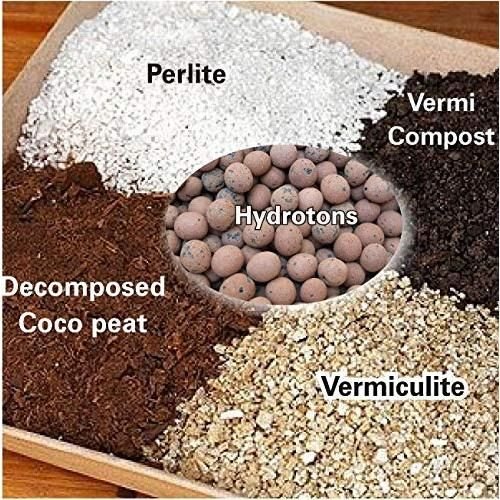
Use a fast-draining mix built for cacti and succulents, or make your own by combining regular potting soil with coarse sand and perlite. The goal is soil that lets water pass through quickly rather than holding onto moisture around the roots.
● Soil mix: Two parts potting soil, one part perlite, and one part coarse sand or pumice.
● Pot choice: Terracotta over plastic whenever possible. It’s porous and wicks excess moisture out of the soil, which matters more here than with almost any other houseplant.
● Pot size: Slightly snug is better than roomy. A pot that’s just a bit wider than the root ball helps prevent the soil from staying wet longer than the roots can use.
Why Snake Plants Are One Of The Few Houseplants That Release Oxygen At Night
Most plants absorb carbon dioxide and release oxygen during the day, then reverse that process slightly at night. Snake plants use a different pathway called CAM photosynthesis, where they open their pores at night instead of during the day to limit water loss in hot, dry native climates. One side effect of this process is that snake plants continue releasing oxygen after dark, rather than only during daylight hours like most houseplants. It’s a small biological quirk, but it’s the real reason snake plants get recommended so often for bedrooms.
How To Propagate A Snake Plant Without Losing Its Variegation
Snake plants can be propagated two ways, and the method you choose actually changes what the new plant looks like. This is one detail most care guides leave out entirely.
● Division: Separate an offset, or pup, from the base of the mother plant along with some of its own roots and rhizome. This method keeps variegation intact because the pup is a genetic clone of the parent.
● Leaf cuttings: Cut a healthy leaf into sections and root them in water or soil. This works well for solid green plants, but variegated varieties almost always grow back solid green from a leaf cutting, since the variegation isn’t carried in the leaf tissue that regenerates roots.
If you want to keep a striped or edged variety looking the way it does now, division is the only reliable way to do it.
8 Common Snake Plant Problems And What They Mean
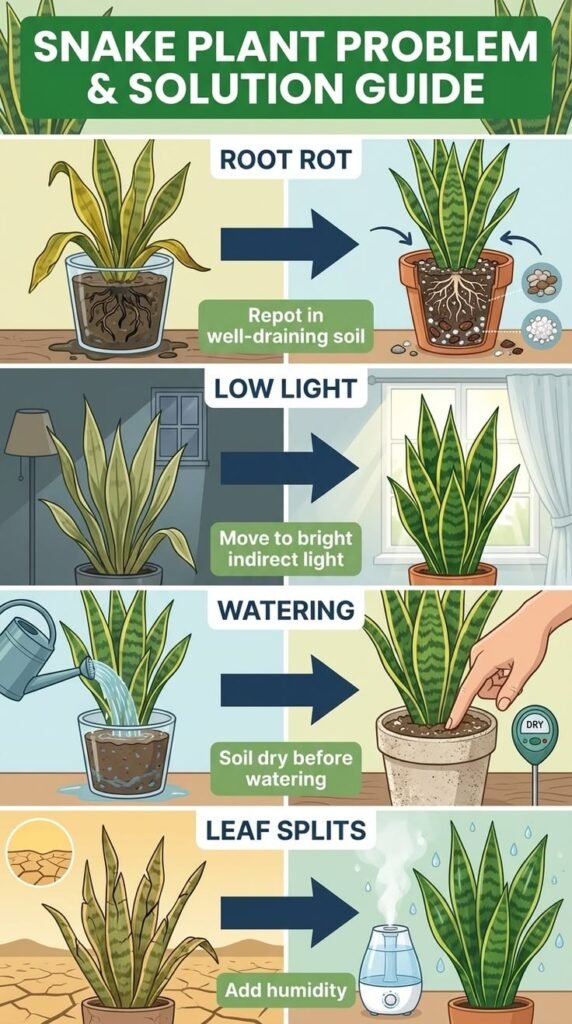
1. Fungal Issues
Common Problems
- Foul-smelling soil
- Brown or yellow leaves
- Root rot caused by excess moisture
Solution
- Repot the plant in fresh, well-draining soil.
- Remove any rotten roots before replanting.
- Improve air circulation around the plant.
- Let the soil dry between waterings.
2. Stunted Growth
Common Problems
- Little or no new growth
- Insufficient sunlight
- Root-bound plant
Solution
- Move the plant to bright, indirect light.
- Repot into a container 1–2 sizes larger if root-bound.
- Provide proper humidity and consistent care.
3. Watering Issues
Common Problems
- Overwatering
- Underwatering
- Soil staying too wet or too dry
Solution
- Check soil moisture before watering.
- Water only when the top few inches of soil are dry.
- Avoid watering on a fixed daily schedule.
4. Falling Leaves
Common Problems
- Mushy leaf bases
- Drooping or collapsing leaves
- Weak growth from low light
Solution
- Reduce watering if the soil is soggy.
- Place the plant in bright, indirect light.
- Divide overcrowded plants if needed.
- Use a pot that matches the root size.
5. Leaves Splitting
Common Problems
- Cracked or split leaves
- Low humidity
- Physical damage
Solution
- Maintain 40–50% indoor humidity.
- Avoid bending or damaging the leaves.
- Trim heavily damaged foliage.
6. Leaves Curling or Folding
Common Problems
- Leaves curling inward or outward
- Water stress
- Pest infestation
- Root rot
Solution
- Adjust your watering routine.
- Keep the plant out of harsh afternoon sun.
- Treat pests with neem oil or diluted isopropyl alcohol.
- Check the roots and repot if root rot is present.
7. Temperature Stress
Common Problems
- Brown or wrinkled leaves
- Damage from sudden heat or cold
- Exposure to AC or heating vents
Solution
- Keep temperatures between 55 and 85°F (12–30°C).
- Protect the plant from sudden temperature changes.
- Keep it away from heating and cooling vents.
8. Thin and Stretched Leaves
Common Problems
- Long, narrow leaves
- Weak, leggy growth
- Insufficient light
Solution
- Move the plant to a brighter location with indirect light.
- Trim stretched leaves to improve appearance.
- Rotate the pot regularly for even growth.
Some other common issues with snake plant growth
● Mushy, dark leaves at the base: Root or rhizome rot from overwatering. Unpot the plant, cut away any soft, discolored roots, and repot in fresh dry soil.
● Leaves splitting or curling: Usually underwatering, though it can also mean the pot is too small for the root system.
● Brown, crispy leaf tips: Low humidity, tap water with high mineral content, or direct sun exposure.
● Leaning or toppling over: A top-heavy plant in a pot that’s become root-bound. This is often a sign it’s close to flowering, which can happen once the roots fill the container completely.
Once you understand how a snake plant actually uses water and light, most of the guesswork disappears. It’s not a plant that needs constant attention; it’s a plant that does best when you leave it alone more than instinct tells you to.
FAQs
Can A Snake Plant Survive In A Bathroom With No Window?
Not long-term. It can tolerate very low light for a while, but without at least some indirect daylight or a grow light, growth stalls and leaves eventually thin out.
Do Snake Plants Need Fertilizer?
Not often. A diluted houseplant fertilizer two to three times during spring and summer is plenty. Skip it entirely in fall and winter.
Why Is My Snake Plant Not Growing New Leaves?
Slow growth is normal for this plant, especially in lower light or during cooler months. If the existing leaves look healthy and firm, the plant is fine; it’s simply conserving energy.