Spider Plant Care: The Complete Guide To Watering, Light, And Growing Those Baby Plantlets
Spider plant brown tips often mean tap water, not lack of care. The plant, as well as its growing tips, is one of the easiest to grow of all houseplants, but it is that exact trait that gives many problems to spider plant lovers. Once the plant is happy, it begins reproducing on its own, creating baby plants, which can be grown into separate plants without any costs. It even accepts the lack of watering and tolerates different light conditions.
Spider plants have been widely grown in homes for a number of years and for good reasons. They filter air pollution, are pet friendly, can never be wiped out, and, when fully grown, become reproducing plants.
Why Do Spider Plants Get Brown Tips?
However, the main cause for such symptoms is the presence of fluoride and chlorine in the tap water that the plant becomes more sensitive to than any other regular houseplant. Despite proper lighting and irrigation, these elements will accumulate in the soil and result in brown and crispy leaves.
In order of likelihood, the following are some typical reasons for brown tips:
- Tap water minerals: fluoride and chlorine buildup, the single most common cause
- Overfertilizing: excess salts in the soil burn the leaf tips
- Low humidity: especially common in winter with heating running
- Dry soil: occasionally letting the plant go without water for too long
- Old age: It’s normal for elderly leaves to have some tip browning.
While the brown tips that have developed will not be able to get rid of themselves, using filtered, distilled, or rainwater normally solves the issue in a matter of a few weeks when they grow again. With the use of scissors, you can trim them in an angled manner.
How Often Should You Water A Spider Plant?
Normally, you should water every one week only if the upper inches of the soil have become dry; however, unlike other indoor plants, spider plants will cope easily even if there is no regular watering due to the fact that the water is stored in their roots. Too much soil moisture is what makes spider plants suffer. Here are some guidelines on how to water your plants properly:
- Make sure there are drainage holes in every pot
- Instead of just a daily splash, water thoroughly until it runs from the bottom
- After watering, empty the saucer to prevent the pot from sitting in standing water
- Before watering again, allow the top inch of soil to dry off
- In the fall and winter, when growth naturally slows, water less frequently
What Does A Spider Plant Need?
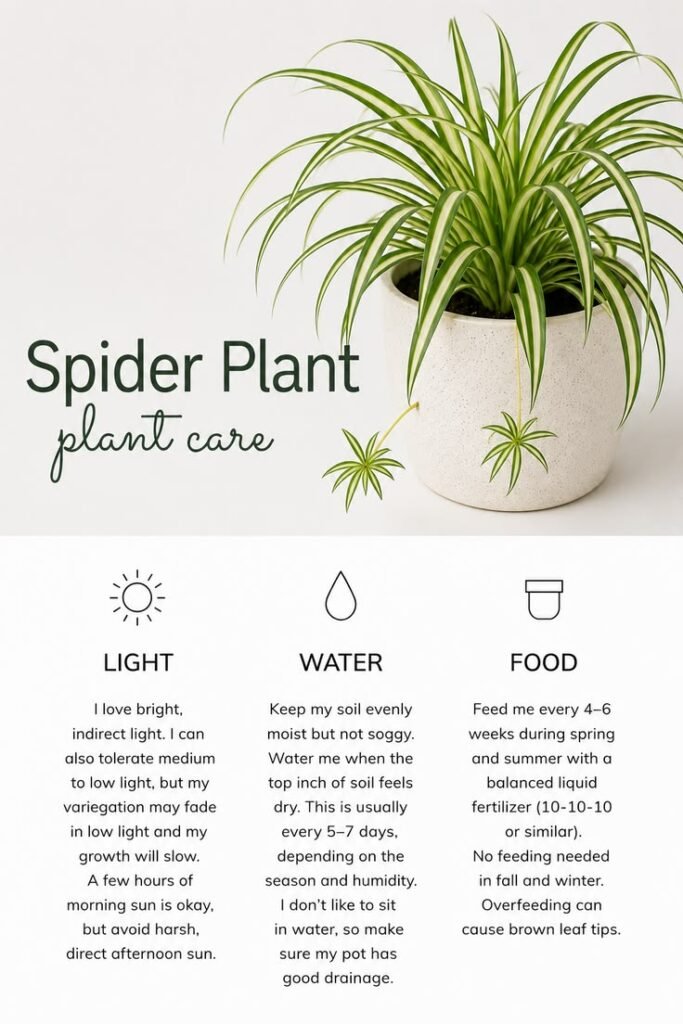
Despite being highly versatile and able to tolerate both partial shade and a couple of hours of mild sunlight in the morning, the plant shows best growth under bright but indirect light. They have been seen in office spaces and dark homes due to this very trait.
The one thing you want to avoid is exposure to intense afternoon sunlight because it can potentially burn or bleach the foliage. If a spider plant looks pale or bleached, it means it is getting too much direct light, while if a spider plant appears spindly and sparse, it means it is not getting enough light. Here is what to expect at each level of lighting:
- Bright, indirect light: full, arching growth and the best chance of producing plantlets
- Medium light: fewer plantlets, healthy but sluggish growth
- Low light: plantlets are uncommon, growth is poor, and the plant lives
- Direct sun: leaves bleach, develop pale patches, and can scorch at the tips
How Do You Get A Spider Plant To Produce Babies?
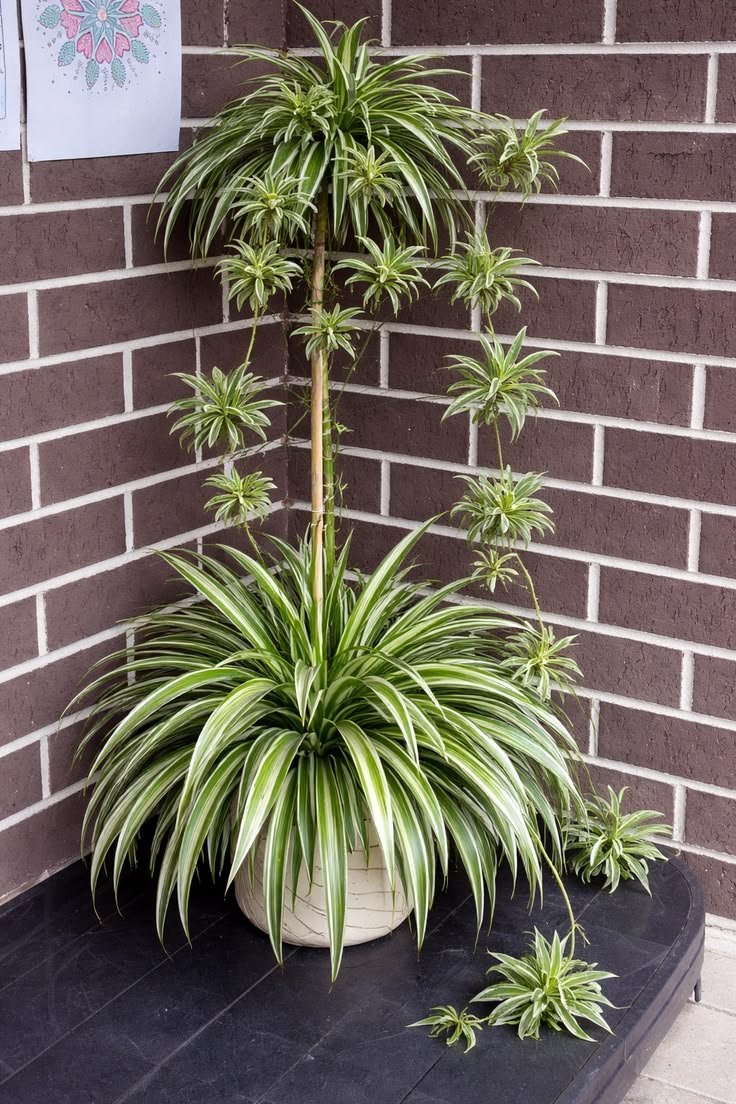
Given adequate lighting from the side without direct sunlight, an established spider plant that has reached root-bounded status will normally develop long stalks bearing small plantlets called spiderettes. This happens after the plant becomes one to two years old and has outgrown its pot.
Continuous lighting and regular watering stimulate blooms, which occur before the development of the plantlets because, from those stems, little white blossoms arise that will be replaced with little plantlets. Some of the ways that can accelerate this stage include:
- Rather than repotting the plant too soon, let it get slightly root-bound
- Instead of often shifting the plant, keep the light bright and steady
- Keep your watering schedule consistent, since erratic watering can cause stress and postpone flowering
- Feed sparingly in the spring and summer to maintain the additional energy needed for blossoming
Because it never quite becomes root-bound enough to cause the reaction, a plant kept in low light or repotted too regularly into large pots may take longer to reach this stage.
How Do You Propagate Spider Plant Babies?
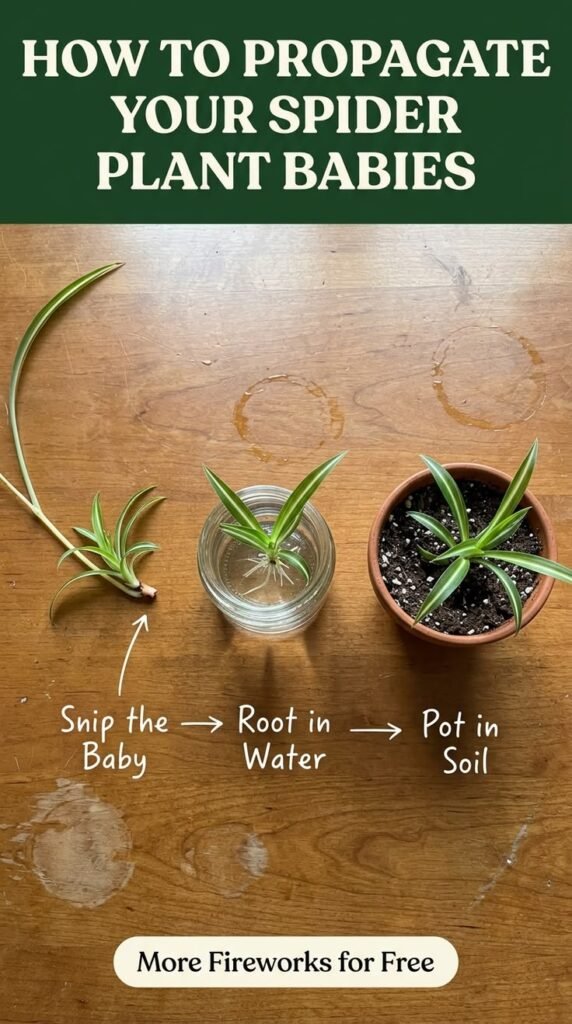
A mature plantlet will show signs of having small brown bumps on its bottom side, and that’s how you know that the roots have started to form. Simply use sterilized scissors to cut it off from the main stem. Afterwards, place it either in potting soil that’s damp or into a glass of water.
For a quick guide on how to propagate:
- Ensure that the baby plant has developed visible nubbins at its bottom end.
- Using clean scissors, cut it from the mother plant at the point where its stem joins the parent.
- Plant it in a glass containing water or in moist potting soil.
- In case of the water propagation, wait till the roots develop to 1-2 inches and then move it to soil.
- Expose the propagated plantlet to bright but indirect light and maintain moist soil initially.
Plants with their roots in the water medium must be transplanted into the soil once the roots have become well-developed.
Common Spider Plant Problems And How To Fix Them
Minerals in tap water are typically the cause of yellow leaf tips. Cut off the yellow portions and use pure or filtered water.
Pale leaves are a sign of too much sun exposure. Move the plant a little farther from the window.
Inadequate illumination is the cause of your plant’s lanky growth. Move the plant to an area with more light.
Yellowing leaves may also indicate overwatering or the plant’s aging process. Ensure that the soil is not always moist.
Failure to produce babies after growth for several years usually indicates that the plant is not sufficiently root-bound or is lacking sufficient light to make it bloom.
If the base of your plant feels soft, then the problem could be root rot, which occurs when the soil remains wet for long periods.
The spider plant needs nothing much and provides in abundance; it grows into a mature, arched plant that ultimately gives you a constant supply of new baby spiders for distribution or planting.
FAQ
Is Spider Plant Toxic To Cats And Dogs?
Absolutely not! Spider plants are not poisonous to cats and dogs. Therefore, these plants are among those houseplants that will not hurt your pets in any way, although eating big amounts can cause digestive system issues.
Why Is My Spider Plant Not Producing Babies?
Before it produces its blooming branches or plantlets, it either needs more time to develop, needs stronger light, or becomes root-bound.
Can I Grow A Spider Plant In Low Light?
While it can thrive in dark places, its rate of growth is slower, and the chances of developing new plantlets decrease. Its best performance will be in bright indirect lighting conditions.
Do Spider Plant Babies Need To Root In Water First?
No, you do not have to do that. Though starting your rooting in water will let you observe the roots before transplanting into the soil, you can root directly in moist soil.
How Often Should I Repot A Spider Plant?
It should be every year or two years, depending on when the roots start to come out of the holes in the pot. Also, for growing more plantlets, it is important for the spider plants to be slightly root-bound.