
How To Water Garden Plants Properly: A Complete Guide
Water is essential for every living organism. It is a symbol of life. So, plants, which are primary producers, need water in the appropriate form to grow in the right direction. Learning how to water garden plants properly saves you time, water, and a lot of frustration when leaves start yellowing for no obvious reason. Most watering mistakes come down to two habits: watering too often and watering the leaves instead of the roots. These two habits can prove make or break for your plant life. If one understands these habits properly, their plant will be lush green forever and soothing for eyes and soul. Get those two things right, and nearly every other watering question sorts itself out. Here’s a detailed, practical walkthrough of proper watering technique, from checking soil moisture to building a full weekly schedule for your specific garden.
How Do You Water Garden Plants The Right Way?
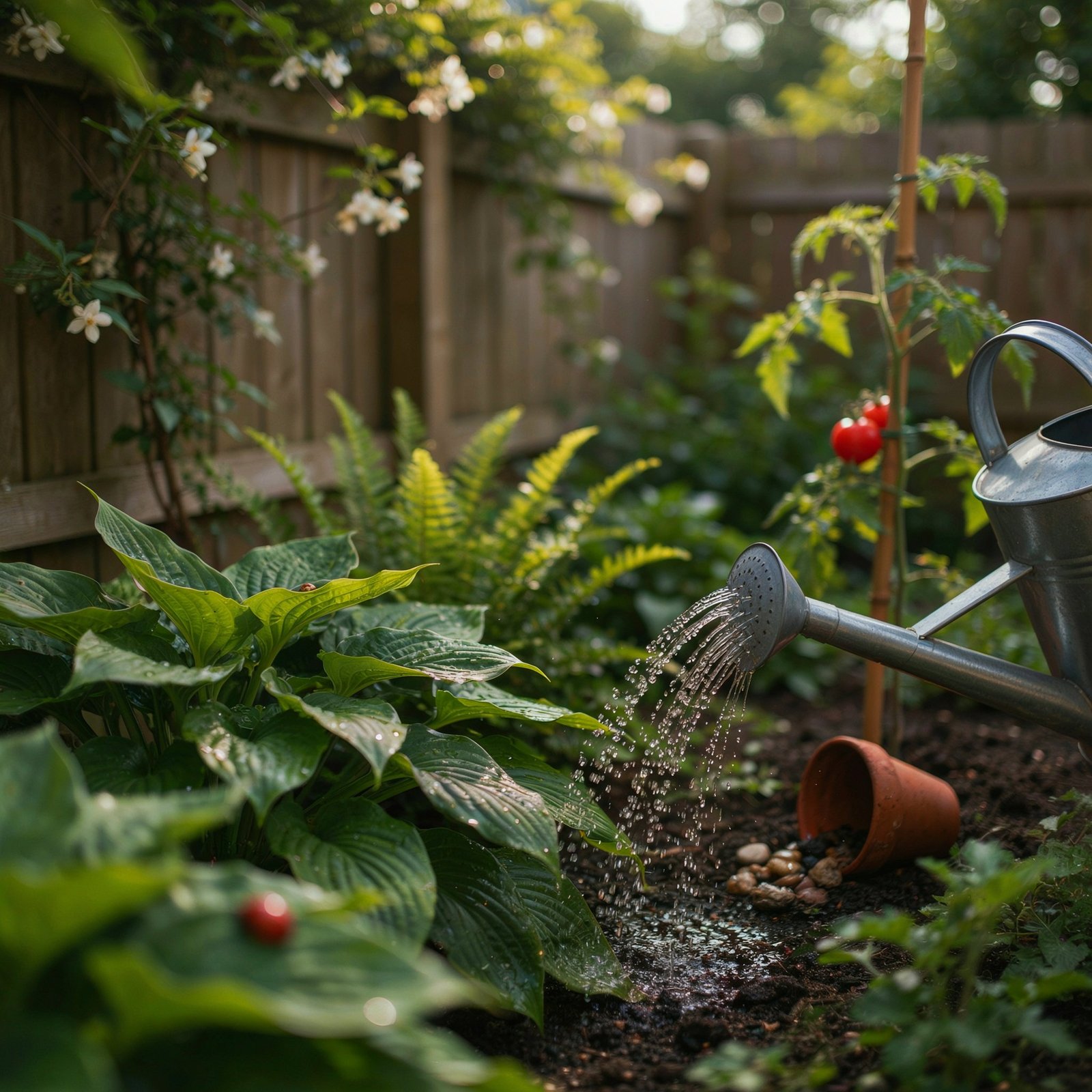
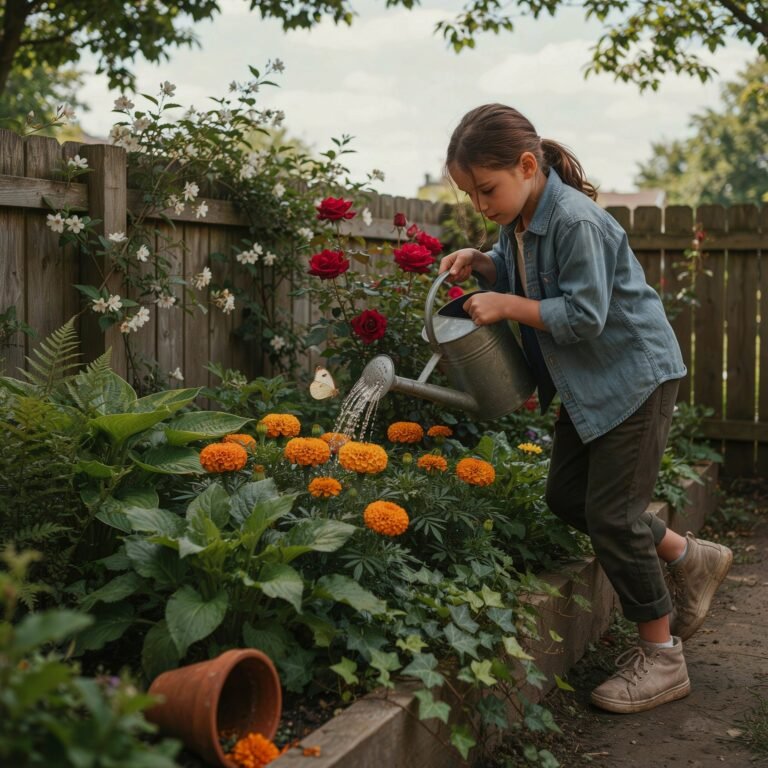
Water slowly, aim at the base of each plant, and soak the soil deeply rather than misting the surface. A slow soak gives water time to sink toward the root zone instead of running off or evaporating before it reaches the roots.
Morning is the best time to do it, ideally before 10 a.m. Cooler temperatures mean less water is lost to evaporation, and any moisture that lands on leaves has the whole day to dry before evening.
For very dry soil, a two-pass approach works better than one long soak. Water the root zone once, wait 15 to 30 minutes, then water again. The first pass softens compacted, dry soil so the second pass can actually soak in instead of running off the surface.
How Deep Should You Water Garden Plants?
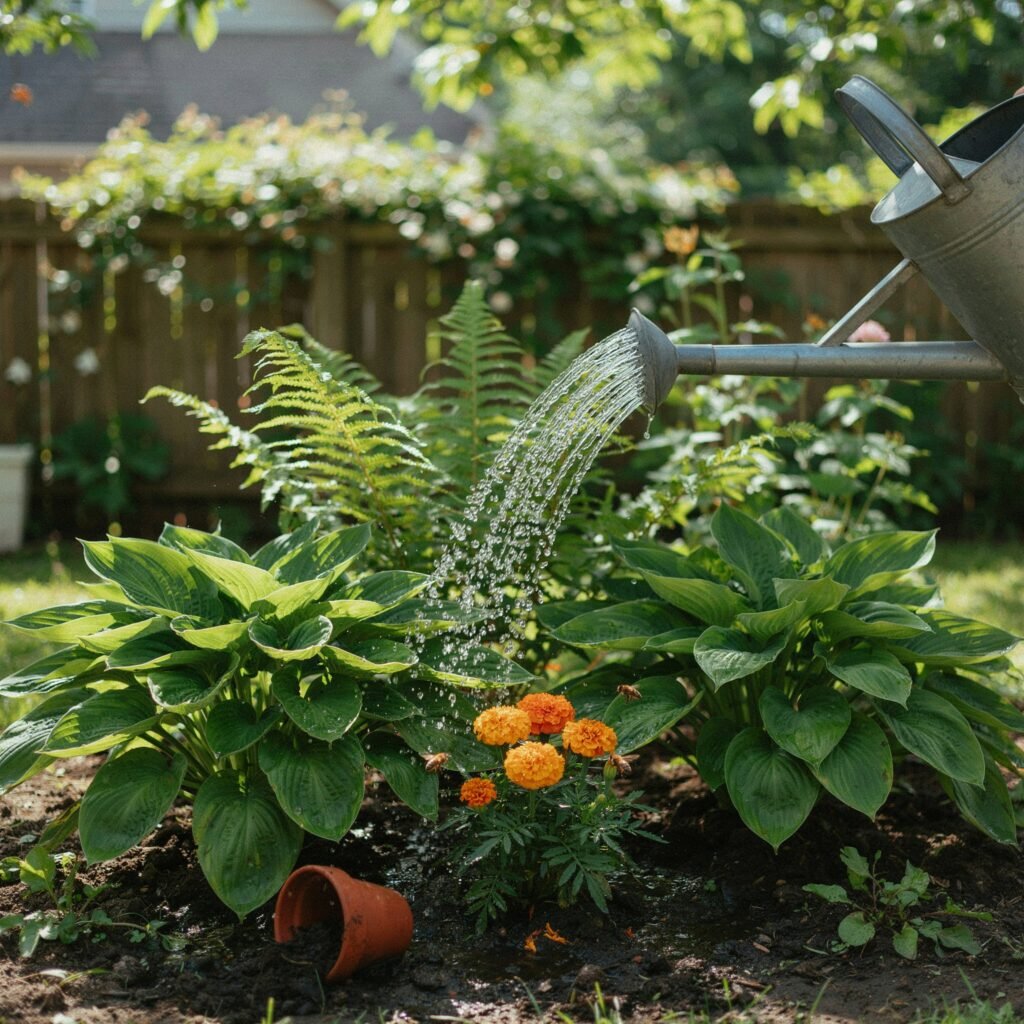
Aim for moisture that reaches about 6 inches into the soil for vegetables and flowers and closer to 12 to 18 inches for trees and larger shrubs with deeper root systems. That depth reaches the active root zone and encourages roots to keep growing downward instead of staying near the surface.
A simple way to check: push a wooden dowel into the soil after watering, then pull it out. Soil that’s moist enough will cling to the wood. If it comes out clean and dry a few inches down, the water hasn’t gone deep enough yet.
What’s The Best Way To Check Soil Moisture Before Watering?
Push a finger 1 to 2 inches into the soil near the plant. Dry soil at that depth means it’s time to water. Soil that’s still cool and moist means you can wait.
A soil moisture meter is a low-cost tool that takes the guesswork out entirely, and it’s especially useful for beginners or for containers where moisture can be uneven from top to bottom. Whatever method you use, never water soil that’s already moist. Overlapping wet cycles is one of the fastest ways to invite root rot.
For newly planted perennials, check both the original root ball and the surrounding native soil separately. The root ball often dries out faster than the soil around it during the first few weeks, so relying on just one spot can miss an early warning sign.
Should You Water At The Base Or Overhead?
Base watering is the better habit for almost every garden plant. Directing water straight to the soil at the base keeps the root zone hydrated without wetting the foliage, which lowers the risk of fungal disease and mildew, since roots absorb water while wet leaves mostly just invite disease.
Overhead sprinklers have their place for lawns and large beds where hand-watering isn’t practical, but they waste water to evaporation and leave leaves damp for hours. If you do use a sprinkler, run it early enough that the sun dries the leaves by midday.
How Often Should You Water Different Types Of Garden Plants?
● Vegetables and annual flowers: Two to three deep waterings a week during the growing season, more often in extreme heat.
● Perennials and roses: Once or twice a week once established, adjusted for soil and rainfall.
● Shrubs: Roughly every three to four weeks once established, weekly for the first year after planting.
● Trees: Once a month once established, every two to three days for the first couple of weeks after planting.
Keeping these categories on separate watering zones, whether that means separate irrigation valves or simply separate days, prevents the common trap of giving every plant the same schedule regardless of its actual needs.
What Tools Make Watering Garden Plants Easier?
● Soaker hoses: Lay them along the base of plants for slow, even, low-waste watering.
● Drip irrigation: Delivers water directly to roots and works well on a timer for busy schedules.
● Watering cans with a narrow spout: Give precise control for containers and small beds.
● Rain gauges: Track how much natural rainfall you’re already getting so you don’t overwater.
● Moisture meters: Take the guesswork out of checking soil, especially in pots.
How Do You Water Different Garden Zones?
Raised beds drain faster than in-ground plots because the soil sits above grade, so they often need watering a bit more often. Check them every few days during warm weather rather than relying on a fixed weekly schedule.
Containers dry out the fastest of all and may need daily checks once temperatures rise, since air reaches the soil from every side of the pot.
In-ground beds hold moisture the longest, especially with a layer of mulch on top, so they can usually stretch to two or three deep waterings a week.
How Do You Build A Weekly Watering Schedule?
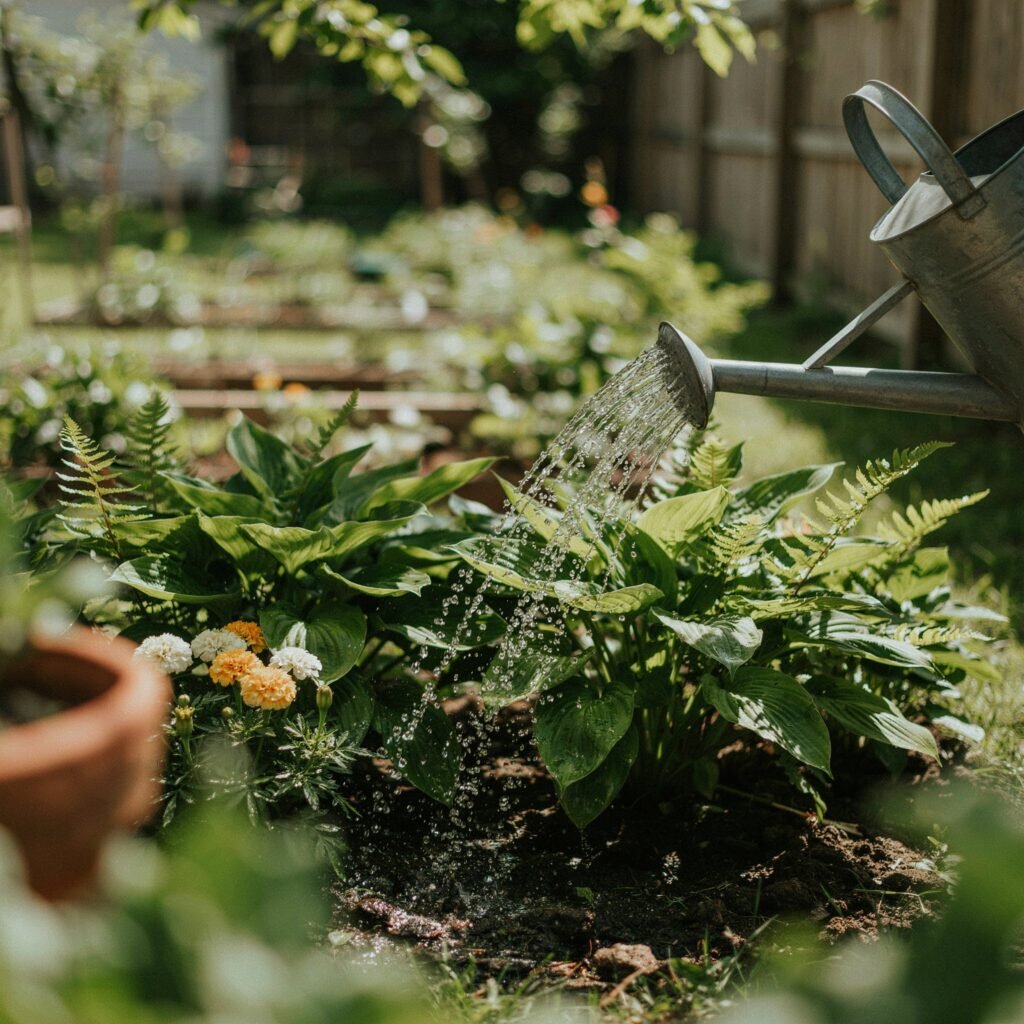
Start by grouping plants into the categories above, since a single schedule rarely fits a whole yard. Pick fixed watering days, like Monday and Thursday for vegetables, and a lighter Saturday check for containers.
Adjust the plan weekly based on rainfall and temperature rather than running it on autopilot. A rain gauge or a simple note on the calendar makes this quick: if you’ve already logged half an inch of rain this week, you can skip or shorten the next scheduled watering.
What Mistakes Ruin A Watering Routine?
Daily shallow watering is the most common mistake. It wets only the surface, encourages shallow roots, and leaves plants poorly prepared for a hot stretch.
Other habits worth breaking: watering the leaves instead of the soil, watering in the middle of the day when evaporation is highest, ignoring how much rain the garden has already received that week, and using the same schedule for every plant type regardless of its actual water needs.
How Does Mulch Change How You Water?
A 2-inch layer of mulch around plants slows evaporation, keeps soil temperature more even, and cuts down on how often you need to water. It also suppresses weeds that would otherwise compete for the same moisture.
Organic mulch, like shredded bark or straw, breaks down over time and adds nutrients back into the soil, which is a small bonus on top of the water savings.
How Do You Conserve Water While Still Watering Properly?
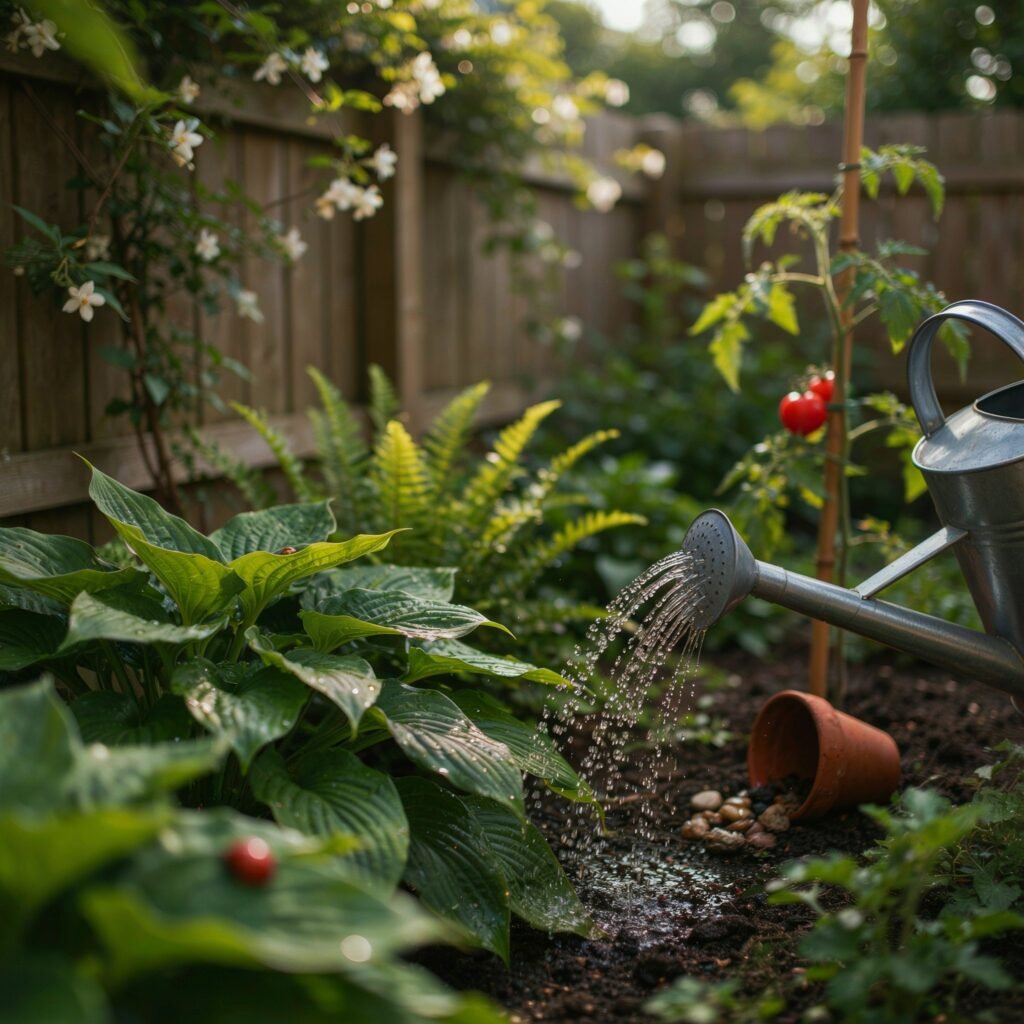
Water conservation and proper watering technique are the same goal, not competing ones. Deep, infrequent watering already uses less water overall than frequent shallow watering, since less of it is lost to surface evaporation.
Drip irrigation and soaker hoses cut water use further by delivering moisture straight to the root zone instead of spraying it into the air. Collecting rainwater in a barrel for use during dry stretches is another low-cost way to reduce how much you pull from the tap.
FAQs
Is A Hose Or A Sprinkler Better For Garden Plants?
A hose or soaker hose is better for most garden beds because it targets the roots directly. Sprinklers are more suited to lawns and large open areas where hand-watering isn’t realistic.
How Long Should A Soaker Hose Run In A Garden Bed?
Most beds need 30 to 45 minutes of soaker hose time to reach a 6-inch soil depth, but sandy soil may need less and clay soil may need more.
Can A Garden Be Overwatered Even With Good Drainage?
Yes. Good drainage reduces the risk but doesn’t remove it. Watering on a fixed schedule without checking soil moisture first can still soak roots more often than they need.
Do New Transplants Need A Different Watering Approach?
Yes. New transplants need consistent moisture while roots establish, often daily for the first one to two weeks, before shifting to the plant’s normal weekly routine.
Does Tap Water Harm Garden Plants Over Time?
Most municipal tap water is fine for garden plants. Water that’s heavily softened or high in chlorine can affect sensitive plants over time, so letting it sit out for a few hours before use is a simple precaution.
Should Trees And Vegetables Be On The Same Watering Schedule?
No. Trees typically need deep watering only once a month once established, while vegetables need it two to three times a week. Splitting them into separate zones or days keeps both healthy.
Proper watering technique is one of the simplest upgrades you can make to a garden’s health this season. For more practical, tested gardening guidance, keep exploring True Essence of Life.

One Comment